Clear Aligners vs Braces: What Should You Know First?
If you are comparing clear aligners vs braces, you are probably asking a practical question: which option can straighten your teeth comfortably, safely, and predictably? The answer is not the same for everyone. Clear aligners can be excellent for many adults and teens who want a removable, less noticeable option. Braces can be more suitable for some complex tooth movements, bite correction, or situations where fixed control is needed.
This guide explains the difference in a clear, patient-friendly way so you can understand your teeth straightening options before booking a consultation. It does not replace a dental examination. A dentist or orthodontic provider can confirm what is suitable only after checking your teeth, gums, bite, jaw relationship, and sometimes X-rays or scans.
How Clear Aligners Work
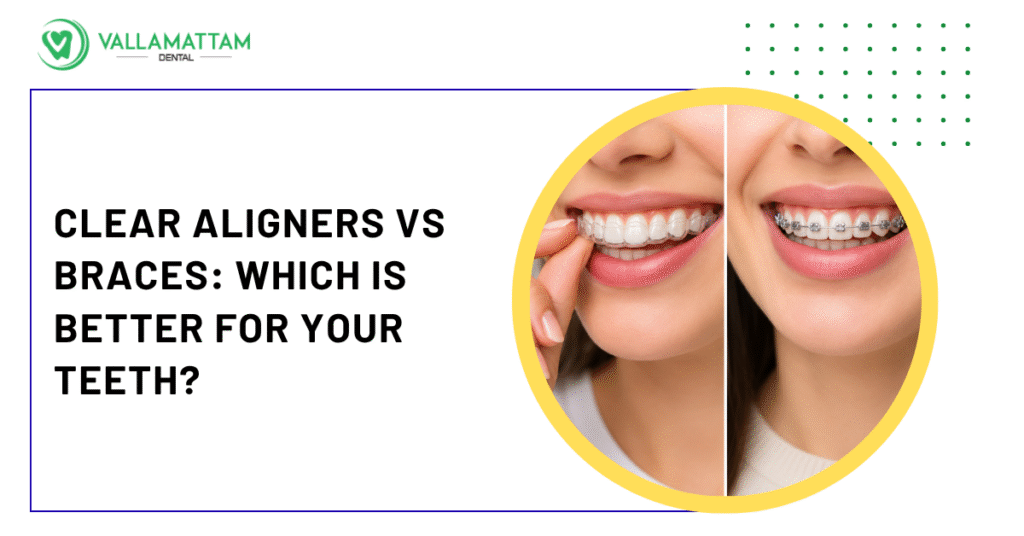
Clear aligners are transparent removable trays that fit closely over your teeth. They apply controlled pressure to move teeth gradually. Most patients receive a planned sequence of aligners, with each set worn for a specific period before moving to the next.
Many people searching for Invisalign vs braces are actually comparing branded aligner systems with traditional fixed braces. Invisalign is one well-known clear aligner brand, but the broader category includes different aligner systems. The important point is not only the brand; it is whether your case is planned carefully and monitored properly.
Clear aligners may be helpful when you have mild to moderate crowding, spacing, relapse after previous orthodontic treatment, or certain bite concerns. They are also popular among working adults because they are less visible in daily conversations and can be removed for meals and brushing.
How Braces Work
Braces use brackets attached to the teeth and wires that guide tooth movement over time. They may be metal, ceramic, or other variations depending on the case. Because braces stay fixed on the teeth, they work continuously and do not depend on the patient remembering to wear them for most of the day.
Braces can be useful when tooth movement needs stronger control, when teeth need significant rotation, when bite correction is more complex, or when a patient may not be able to wear removable aligners consistently. For some people, braces may be the more predictable route. For others, aligners may achieve the goal with better convenience.
Are Clear Aligners Better Than Braces?
The common question, are clear aligners better than braces, has a careful answer: clear aligners are better for some situations, while braces are better for others. Better does not simply mean more modern or less visible. It means better suited to your dental condition, lifestyle, oral hygiene, treatment goals, and ability to follow instructions.
- Clear aligners may suit you if: you want a discreet option, can wear the trays as advised, have good oral hygiene, and need mild to moderate correction.
- Braces may suit you if: your case is more complex, you may forget removable trays, or your dentist needs more fixed control over tooth movement.
- Both may be possible if: your teeth and bite allow more than one safe treatment plan, and your final choice depends on comfort, appearance, budget, and timeline.
A proper consultation can help you avoid choosing based only on appearance. The most invisible option is not always the most appropriate option, and the most traditional option is not always necessary.
Comfort, Appearance, and Daily Life
Appearance
Clear aligners are usually less noticeable than braces, which is one reason many adults ask about clear aligners for adults. They can be a good fit for people who meet clients, attend meetings, teach, speak publicly, or simply prefer a subtle treatment option.
Ceramic braces can also look less obvious than metal braces, but they are still fixed to the teeth. If appearance is a major concern, aligners may feel more convenient, provided they are clinically suitable.
Eating and drinking
With clear aligners, you usually remove the trays before eating. This means fewer food restrictions compared with braces. However, you need discipline. After meals, brushing or at least rinsing before reinserting aligners is important to reduce the chance of staining, bad breath, or plaque build-up.
With braces, certain sticky, hard, or chewy foods may need to be avoided because they can damage brackets or wires. Cleaning around braces also takes extra care.
Speech and comfort
Both options can feel unusual at first. Clear aligners may cause temporary pressure or a slight lisp during the adjustment period. Braces may cause rubbing or soreness after wire changes. Mild discomfort can be normal during tooth movement, but severe pain, swelling, pus, fever, trauma, or pain that disturbs sleep should be checked urgently.
Cleaning and Gum Health Matter
Healthy gums and clean teeth are important before and during orthodontic treatment. If plaque is already building up, moving teeth without addressing gum health may increase the risk of inflammation, bleeding gums, enamel marks, or cavities. This is why a general dental checkup is often useful before starting any teeth straightening plan.
Clear aligners make brushing and flossing easier because you remove the trays. But they can trap food particles or sugars against teeth if worn without cleaning after meals. Braces do not need removal, but they require careful brushing around brackets and under wires. In both cases, your daily habits strongly influence the health of your teeth during treatment.
Treatment Time and Predictability
Treatment time depends on the complexity of the case, not only the appliance. Some minor alignment cases may improve in months. More complex bite or crowding cases may take longer. Clear aligner plans can look simple on a screen, but real tooth movement depends on biology, attachment design, patient compliance, and regular review.
Braces may be more predictable for certain complex movements because they are fixed and allow continuous control. Clear aligners may be very predictable when the case is selected well and the trays are worn as instructed. If aligners are not worn for the recommended hours, treatment may slow down or refinements may be needed.
Cost Factors to Consider
There is no single cost answer for clear aligners vs braces because fees can vary based on case difficulty, records needed, appliance type, number of aligners or adjustment visits, refinement needs, and retention after treatment. A simple spacing case and a complex bite correction are not the same treatment, even if both involve straightening teeth.
When comparing fees, ask what is included. Important points include consultation records, scans or X-rays, review visits, refinements if needed, emergency visits for appliance issues, and retainers after treatment. Retainers matter because teeth can shift after active treatment if retention is not followed.
When Should You See a Dentist Before Deciding?
You should consider a dental consultation if your teeth are crowded, spaced, rotated, shifting after previous braces, or difficult to clean because of alignment. A checkup is also important if you have gum bleeding, tooth mobility, jaw pain, clicking, uneven biting, tooth wear, or cavities that may need attention before orthodontic care.
If you are specifically looking for clear aligners in Kakkanad, the consultation should ideally include an assessment of your bite, gum condition, tooth shape, smile goals, and whether aligners can achieve the movement needed. In some cases, X-rays or digital scans may be advised. Only a dental examination and X-ray, when needed, can confirm the correct treatment approach.
Seek urgent dental care if you have facial swelling, severe pain, fever, pus, dental trauma, a broken tooth causing pain, or pain that wakes you from sleep. These symptoms may need prompt attention before any cosmetic or orthodontic planning.
How to Choose Between Aligners and Braces
A practical way to decide is to separate lifestyle preferences from clinical needs. Lifestyle questions include whether you can wear aligners consistently, whether you prefer a removable appliance, and how important appearance is during treatment. Clinical questions include how much tooth movement is required, whether your bite needs correction, and whether your gums and bone support are healthy.
If your main goal is a broader improvement in tooth position, smile balance, or cosmetic appearance, your dentist may also discuss smile makeover planning after checking whether orthodontic movement, whitening, bonding, veneers, or other options are relevant. Not everyone needs cosmetic treatment, but it can be useful to understand the sequence if alignment is part of a larger smile goal.
A Soft Next Step
If you are unsure which option is suitable, a consultation can help you make a confident decision without guessing. At Vallamattam Dental, the discussion can focus on your current tooth position, oral health, expectations, and whether aligners or braces are realistic for your case. You can contact Vallamattam Dental if you want a professional opinion before choosing a treatment path.
FAQs
Are clear aligners better than braces?
Clear aligners may be better for mild to moderate alignment issues, especially when appearance and removability are important. Braces may be better for more complex movements or when fixed control is needed. A dentist can confirm after examining your teeth and bite.
Is Invisalign vs braces the same comparison as clear aligners vs braces?
Invisalign is a well-known clear aligner brand, while clear aligners describe the wider category of removable transparent trays. The comparison is similar, but the best choice depends on your case planning, monitoring, and clinical suitability, not the brand name alone.
Can adults use clear aligners?
Yes, clear aligners for adults can be suitable in many cases, especially when gums and teeth are healthy and the required movement is appropriate for aligner treatment. Adults with gum problems, missing teeth, or complex bite concerns may need additional evaluation first.
Do braces work faster than clear aligners?
Not always. Treatment speed depends on the complexity of the case, biology, appliance control, and patient cooperation. Some aligner cases can be efficient, while some braces cases take longer. Your dentist can estimate timing after assessment.
Will I need X-rays before teeth straightening?
In many cases, X-rays or scans may be recommended to check roots, bone levels, impacted teeth, previous dental work, and bite factors. Only a dental examination and X-ray, when needed, can confirm whether aligners, braces, or another plan is appropriate.