Clear Aligners for Adults: What to Know Before Starting
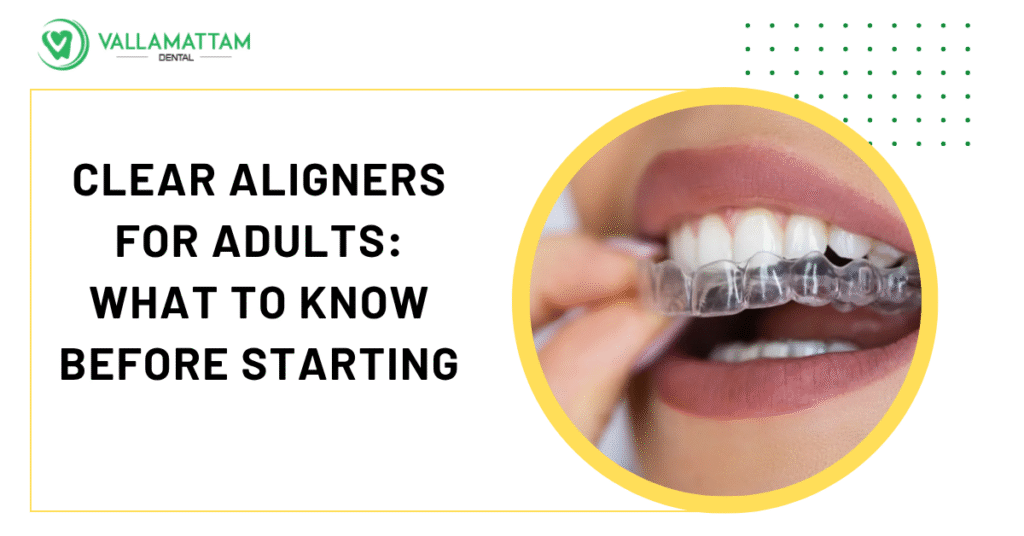
Clear aligners for adults have become a popular option for people who want straighter teeth without fixed metal braces. They are transparent, removable trays that gradually move teeth into a planned position. For many adults, this can feel more practical than traditional braces because aligners are less visible and can be removed for eating, brushing, and important social or professional situations.
However, adult clear aligners are not suitable for every dental concern. The right choice depends on your bite, gum health, bone support, existing dental work, tooth movement needed, and how consistently you can wear the trays. A dentist or orthodontic-trained dental professional can confirm suitability only after an examination, dental scans, and sometimes X-rays.
This guide explains what adults should know before starting clear aligner treatment, including benefits, limits, warning signs, and when a dental checkup becomes important.
Why Adults Consider Clear Aligner Treatment
Adults often look for teeth straightening for adults because of crowding, spacing, rotated teeth, relapse after previous braces, or bite changes that become more noticeable over time. Some people also feel their smile has shifted after wisdom tooth eruption, gum changes, or years without retainers.
Common reasons adults ask about aligners include:
- Crowded front teeth that make cleaning difficult
- Spaces between teeth that affect appearance or food trapping
- Teeth that have shifted after past orthodontic treatment
- Mild bite problems affecting chewing comfort
- A desire for a less visible alternative to braces
- Planning cosmetic dental work after improving tooth position
Clear aligners can often help with mild to moderate alignment concerns. In some cases, they may also be part of broader smile makeover planning, especially when tooth position affects the final appearance of veneers, bonding, whitening, or other cosmetic treatments.
How Clear Aligners Work
Clear aligners are custom-made trays designed from digital scans or impressions of your teeth. Each set applies gentle pressure to guide selected teeth in small stages. You usually wear each aligner for a specific number of days before moving to the next tray, based on your dentist’s instructions.
Most clear aligner treatment requires wearing the trays for 20 to 22 hours a day. They are removed for meals, drinking anything other than water, brushing, and flossing. This flexibility is one of the main reasons adults prefer aligners, but it also means treatment depends heavily on patient discipline.
Some cases may need small tooth-colored attachments placed on the teeth to help the aligners grip and move teeth more predictably. In certain situations, minor polishing between teeth may be advised to create space. These decisions should be made only after a clinical assessment and proper treatment planning.
Are Clear Aligners Better for Adults Than Braces?
Many people ask whether clear aligners are better than braces. The honest answer is that they are better for some adults, but not for everyone. Aligners are often convenient, discreet, and comfortable for mild to moderate correction. Braces may be more suitable for complex bite issues, severe rotations, significant vertical tooth movement, or cases that need more controlled force.
Invisalign for adults and other clear aligner systems follow similar principles, but treatment success depends less on the brand name and more on diagnosis, planning, case selection, and compliance. A well-planned aligner case can work efficiently. A poorly selected case may take longer, need refinements, or require a different approach.
If you are exploring clear aligners in Kakkanad, it is useful to ask what type of tooth movement is needed, whether your bite is suitable, how long treatment may take, and what limitations apply to your case.
Who May Be a Good Candidate?
Clear aligners for adults may be suitable when the teeth and gums are generally healthy and the alignment issue is within the range that aligners can predictably manage. A dentist can confirm this after checking your gums, bite, teeth, jaw relationship, and oral hygiene.
You may be considered a possible candidate if you have:
- Mild to moderate crowding or spacing
- Relapse after previous braces or aligner treatment
- Good gum health and stable bone support
- No untreated cavities or active gum infection
- The ability to wear aligners consistently every day
- Realistic expectations about treatment time and refinements
Adults with crowns, bridges, implants, missing teeth, worn teeth, or gum recession may still be eligible in some cases, but planning needs extra care. Existing dental work can affect how teeth move and how aligners fit.
When Aligners May Not Be the Best First Step
Clear aligners should not be started without checking for dental disease. Moving teeth when there is untreated decay, active gum disease, severe bone loss, or infection can create complications. In some cases, dental problems must be treated before orthodontic movement begins.
A general dental checkup before aligners is important if you have bleeding gums, loose teeth, persistent bad breath, tooth pain, food lodgement, or sensitivity. Only a dental examination and, where required, X-rays or scans can confirm whether treatment is safe and what should be done first.
You should seek urgent dental care if you notice swelling, severe pain, fever, pus, facial swelling, dental trauma, or pain that disturbs sleep. These signs may indicate infection or injury that needs timely attention and should not be delayed for cosmetic or orthodontic planning.
What Adults Should Ask Before Starting
Before beginning clear aligner treatment, ask practical questions. Adult schedules, work travel, social commitments, and eating habits can affect compliance. Clear aligners are removable, but they only work when worn as directed.
- What problem are we trying to correct?
- Is my bite suitable for aligners, or would braces work better?
- Do I need fillings, gum treatment, or cleaning first?
- Will attachments or interproximal reduction be needed?
- How many hours per day must I wear the aligners?
- How long may treatment take in my case?
- Will refinements be needed after the first set?
- What retainers will I need after treatment?
These questions help you understand both the benefits and responsibilities of treatment. They also reduce the chance of disappointment from unrealistic expectations.
Daily Life With Clear Aligners
Most adults adapt to aligners within a few days. Mild pressure or soreness can occur when starting a new tray. Speech may feel slightly different at first, but this often improves as your tongue adapts. Aligners should be removed before eating because chewing with them can damage the trays.
Good oral hygiene is essential. Brush and floss before reinserting aligners whenever possible. If food or sugary drinks stay trapped under the trays, the risk of cavities, staining, and bad breath can increase. Cleaning the trays as advised also helps keep them clear and fresh.
For working adults, it helps to keep a small dental kit with a toothbrush, floss, and aligner case. Avoid wrapping aligners in tissue during meals, as this is a common way trays get thrown away by mistake.
How Long Does Treatment Take?
Treatment time varies. Some minor alignment corrections may take a few months, while more involved cases may take a year or longer. The timeline depends on the amount of tooth movement, bite correction, age-related bone response, gum health, and whether aligners are worn as instructed.
Adults should also understand that refinements are common in aligner treatment. A refinement means additional trays may be planned if certain teeth have not moved exactly as expected. This does not always mean treatment has failed; it is often part of careful finishing.
What Happens After Treatment?
Teeth can shift after any orthodontic treatment, including clear aligners and braces. Retainers are usually needed to maintain the result. Your dentist may recommend removable retainers, fixed retainers, or a combination depending on your bite and relapse risk.
Skipping retainers is one of the most common reasons adults notice their teeth moving again. If you had braces years ago and your teeth shifted, it may have happened because retainers were not worn long enough or because the bite changed over time.
When to Book a Consultation
A consultation is useful if you are unhappy with crowding, spacing, tooth movement after previous treatment, or bite discomfort. It is also important if alignment problems make brushing difficult or food gets trapped between teeth. A dentist can assess whether clear aligner treatment is appropriate or whether another option would be safer or more predictable.
At Vallamattam Dental, adults considering clear aligners in Kakkanad can discuss suitability, treatment expectations, oral health concerns, and alternatives in a calm, practical way. If you want to understand whether aligners are right for your situation, you can contact Vallamattam Dental for an assessment. The goal should be to choose the option that fits your dental health, lifestyle, and long-term stability.
FAQs
Are clear aligners for adults effective?
Clear aligners can be effective for many adults with mild to moderate crowding, spacing, or relapse after previous treatment. Effectiveness depends on case selection, treatment planning, gum health, and wearing the trays as instructed. A dentist can confirm suitability after an examination and scan or X-ray if needed.
Is Invisalign for adults different from other aligners?
Invisalign for adults is one clear aligner system, but there are also other aligner options. The most important factors are diagnosis, planning, monitoring, and compliance. Brand choice may matter, but it should not replace a proper dental assessment.
Can I get clear aligners if I have crowns or implants?
In some cases, adults with crowns or implants may still be able to use aligners, but planning is more complex. Implants do not move like natural teeth, and crowns may affect aligner fit. A dentist can evaluate your mouth and explain what is possible.
Do clear aligners hurt?
Clear aligners may cause mild pressure or soreness, especially when changing to a new tray. This usually settles. Severe pain, swelling, pus, fever, trauma, or pain that disturbs sleep should be checked urgently by a dentist.
Do I need a checkup before starting adult clear aligners?
Yes, a checkup is important. Untreated cavities, gum disease, infections, or unstable teeth should be addressed before moving teeth. Only a dental examination and appropriate imaging can confirm the safest treatment plan.