Invisalign vs Retainers: What Is the Difference?
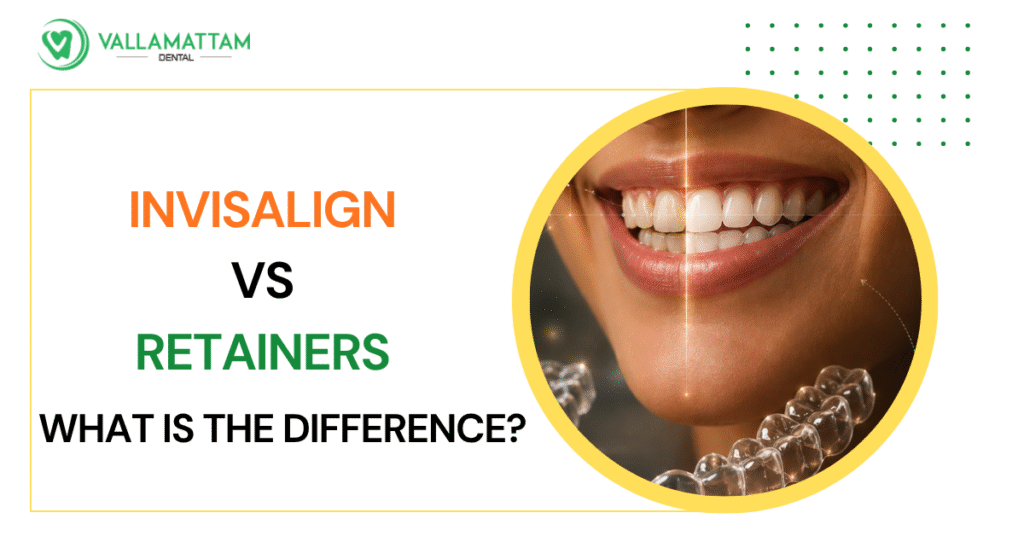
If your teeth have started shifting, or if an old retainer no longer fits, it is natural to compare Invisalign vs retainers. They can look similar because both may be clear removable trays, but they are not used for the same purpose. Invisalign and other clear aligners are active appliances that may move teeth in planned stages. Retainers are mainly passive appliances that help hold teeth in their corrected position.
This difference is important because the wrong appliance can delay the right care. A retainer may not correct noticeable crowding or spacing. Clear aligners may be unnecessary if your teeth are already stable and only need maintenance. A dentist can confirm the right option after checking your teeth, bite, gums, bone support, and dental history.
This guide explains clear aligners vs retainers in practical terms, including when each may be used, what symptoms need attention, and when a dental consultation is sensible.
What Invisalign and Clear Aligners Are Used For
Invisalign is a brand of clear aligner. Clear aligners use a series of custom-made trays to apply controlled pressure to selected teeth. The trays are usually changed in sequence, and each tray is designed to guide small movements. Treatment planning often involves a scan, bite evaluation, photographs, and clinical assessment.
Clear aligners may be considered for mild to moderate crowding, small gaps, rotated teeth, or relapse after previous braces. They may also be part of a wider plan to improve bite function or smile appearance. However, not every case is suitable. Complex bite problems, severe rotations, significant jaw discrepancies, or teeth with limited bone support may need a different orthodontic approach.
If you are considering clear aligner treatment, ask what tooth movements are planned, how long treatment may take, whether attachments are needed, and what limitations apply in your case.
What Retainers Are Used For
Retainers are used to maintain tooth position after orthodontic treatment. After braces or aligners, teeth can slowly shift because the surrounding bone, gums, and ligaments need time to stabilise. Retainers reduce the chance of relapse by holding the teeth in their planned position.
There are different types of orthodontic retainers. Clear removable retainers look like thin transparent trays. Hawley retainers use acrylic and wire. Fixed retainers are bonded behind the teeth, usually across the front teeth. Your dentist or orthodontic provider may recommend one type or a combination depending on your bite, hygiene, and risk of relapse.
Retainers are not usually meant to create major tooth movement. In some cases, a very slight recent shift may be managed if the retainer still fits safely, but this should be confirmed by a dentist. Forcing a tight retainer into place can cause tooth soreness, gum pressure, bite changes, or appliance damage.
Clear Aligners vs Retainers: The Main Differences
The simplest summary is this: aligners move teeth, while retainers hold teeth. The clinical decision can still be more detailed, especially when teeth have shifted after past orthodontic treatment.
- Purpose: Clear aligners are used for planned tooth movement. Retainers are used for stability after movement has been completed.
- Planning: Aligners require assessment, digital or physical impressions, movement planning, and monitoring. Retainers require a stable tooth position and accurate fit.
- Tray sequence: Aligners usually involve multiple trays. Retainers are often one upper and one lower appliance, replaced when worn or ill-fitting.
- Wear time: Aligners often need long daily wear as advised by the dentist. Retainer wear may be full-time at first and then night-time, depending on the case.
- Expected result: Aligners can change tooth position. Retainers should preserve the result already achieved.
This is why retainers are not a shortcut for orthodontic treatment. If teeth have moved significantly, a new retainer may simply hold the new position rather than straighten the teeth.
Can Retainers Straighten Teeth?
Many patients ask whether retainers can straighten teeth. In most cases, the answer is no for meaningful movement. Retainers are designed to maintain alignment, not to plan and control active tooth movement. A retainer that feels slightly tight may sometimes fit after a very minor recent change, but it should not be used as a do-it-yourself treatment.
If your retainer does not seat fully, causes pain, creates gum pressure, or changes how your teeth meet, stop forcing it and book a checkup. A dentist can assess whether the appliance can be adjusted, whether a new retainer is enough, or whether clear aligners or braces may be more appropriate.
Why Teeth Shift After Braces or Aligners
Teeth shifting after braces or aligners is common, especially if retainers are not worn as advised. Teeth are supported by bone and ligaments that can remodel over time. Natural ageing, tongue pressure, bite forces, missing teeth, grinding, gum disease, and dental restorations can all influence tooth position.
Common reasons teeth may move include:
- Not wearing retainers consistently
- A broken, loose, or distorted retainer
- A fixed retainer that has partly detached
- Gum disease or bone loss reducing tooth support
- Grinding, clenching, or bite imbalance
- Missing teeth that allow neighbouring teeth to drift
- Normal age-related changes in the bite
A general dental checkup helps identify whether the issue is simple orthodontic relapse or whether decay, gum disease, tooth wear, or bite stress is contributing. Only a dental examination and, when needed, X-rays or scans can confirm the cause and the safest treatment plan.
When Invisalign May Be the Better Fit
Invisalign or another aligner system may be considered when teeth need planned movement and the case is suitable for removable trays. This may include mild crowding, spacing, rotated front teeth, or relapse after previous orthodontic treatment. Adults often prefer aligners because they are less visible and removable for eating, brushing, and flossing.
Suitability depends on more than how the teeth look. Gum health, bone support, cavities, previous crowns, bridges, implants, bite relationship, jaw comfort, and the amount of movement all matter. If there is active gum disease, untreated decay, or unstable dental work, those concerns may need attention before orthodontic movement begins.
Aligners also require commitment. If trays are not worn for the recommended time, teeth may not track as planned. This can extend treatment or require refinements.
When a Retainer May Be Enough
A retainer may be enough when the teeth are already in an acceptable position and the goal is to prevent future shifting. It may also be recommended after clear aligners or braces to protect the result. In some limited cases, if a tiny shift has happened recently and the appliance still fits safely, your dentist may advise a supervised wear schedule.
You may need a replacement retainer if your current one is cracked, warped, loose, heavily worn, stained, or no longer seating properly. Clear retainers can distort with heat and wear down over time, especially in people who grind their teeth. Fixed retainers should be checked if they feel sharp, loose, or difficult to clean around.
Warning Signs That Should Not Be Ignored
Teeth shifting is sometimes only a retention issue, but it can also be linked to gum problems, bite changes, infection, trauma, or tooth support loss. A dental checkup is important if movement appears with other symptoms.
- Bleeding gums, swollen gums, or persistent bad breath
- Loose teeth or widening gaps
- Pain when biting or chewing
- A retainer that suddenly stops fitting
- A fixed retainer that has broken or detached
- Food getting trapped in a new area
- Jaw discomfort, clenching, or a changed bite
Seek urgent dental care if you notice facial swelling, severe pain, fever, pus, dental trauma, or pain that disturbs sleep. These symptoms may indicate infection or injury and should not wait for routine orthodontic planning.
Questions to Ask Before Deciding
Before choosing between Invisalign vs retainers, it helps to ask clear, practical questions. The goal is to understand whether you need tooth movement, retention, or treatment for another dental problem first.
- Have my teeth shifted, or has my bite changed?
- Is the movement minor enough for a retainer?
- Would clear aligners predictably correct this issue?
- Are my gums and bone support healthy enough for tooth movement?
- Do I need cleaning, fillings, or gum treatment first?
- How long would treatment take in my case?
- What retainer plan will I need after treatment?
If alignment is part of a larger cosmetic goal, such as improving tooth proportions, whitening, bonding, or veneers, it may be useful to discuss smile makeover planning. This helps sequence care conservatively, so teeth are positioned before cosmetic work is considered.
How to Care for Aligners and Retainers
Whether you wear aligners or retainers, hygiene matters. Trays can hold saliva, plaque, and food particles against the teeth. Wearing them over unbrushed teeth after meals may increase the risk of bad breath, staining, gum irritation, and cavities.
- Brush and floss before reinserting trays when possible
- Rinse appliances after removing them
- Clean them as advised by your dentist
- Store them in a protective case
- Avoid hot water because it can warp plastic
- Bring retainers to dental reviews so the fit can be checked
Good appliance care protects both your oral health and the fit of the tray. It also allows your dentist to spot wear, distortion, or hygiene issues early.
When to Book a Dental Consultation
A consultation is worthwhile if your teeth have shifted, your retainer no longer fits, you are unsure whether clear aligners vs retainers are right for you, or you want to understand the options before committing to treatment. The best choice depends on your current alignment, gum health, bite, dental history, and long-term stability needs.
At Vallamattam Dental, patients can discuss orthodontic retainers, Invisalign-style aligners, relapse after braces, and practical next steps in a calm, educational consultation. If you would like a professional opinion, you can contact Vallamattam Dental to arrange an assessment. The aim is to understand the cause of shifting and choose a plan that fits your mouth, health, and expectations.
FAQs
Is Invisalign the same as a retainer?
No. Invisalign is a clear aligner system used to move teeth through a planned sequence of trays. A retainer is mainly used to hold teeth in position after treatment. They may look similar, but their purpose is different.
Can I use my old retainer to straighten shifted teeth?
You should not force an old retainer over shifted teeth. If it does not fit comfortably, a dentist should check it. In some cases a new retainer may be enough, while other cases may need clear aligners or another orthodontic option.
Do retainers after Invisalign need to be worn long term?
Long-term retainer wear is often recommended because teeth can shift over time. The schedule may change from full-time wear to night-time wear depending on your dentist’s instructions and your relapse risk.
Which is better, clear aligners or retainers?
Neither is automatically better. Clear aligners are used when teeth need movement. Retainers are used when teeth need stability. A dental examination and, when needed, scans or X-rays can confirm which is appropriate.
When should teeth shifting be checked urgently?
Teeth shifting should be checked promptly if it is linked with swelling, severe pain, fever, pus, trauma, loose teeth, or pain that disturbs sleep. These signs may point to infection, injury, or gum problems that need timely care.