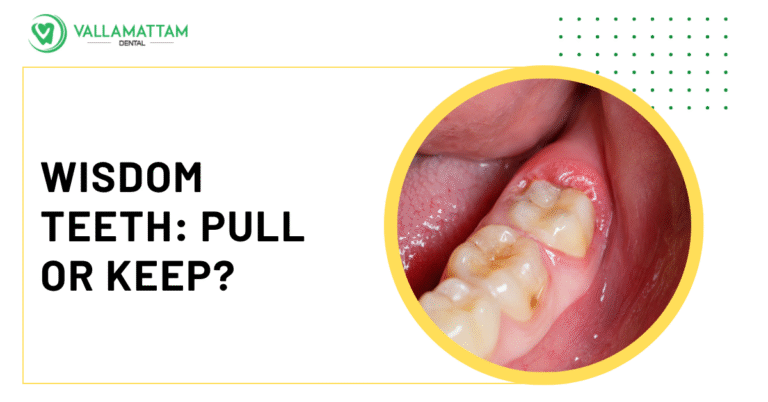
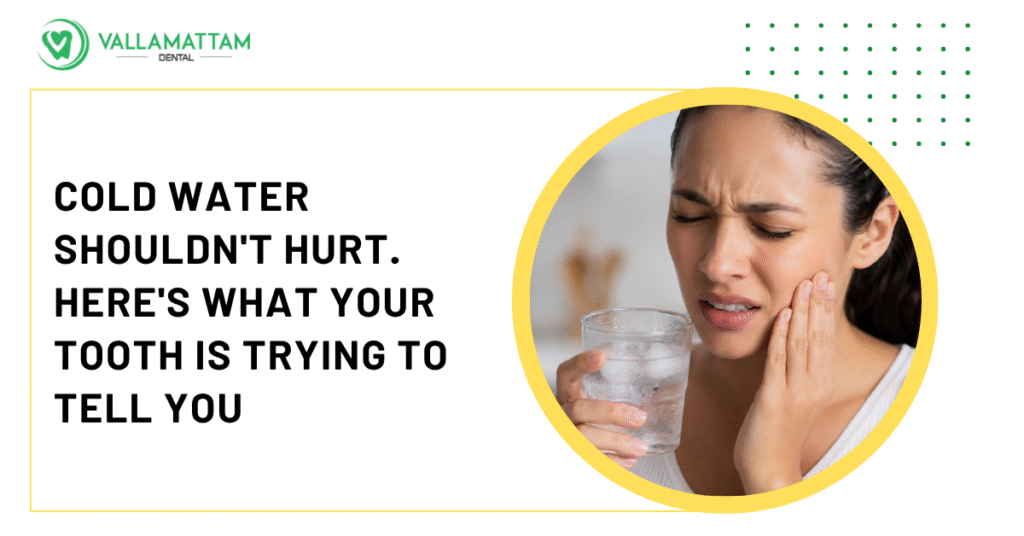
If your tooth hurts when you drink cold water, it is usually a sign that something is exposing the sensitive inner part of your tooth. This could be caused by worn enamel, receding gums, tooth decay, a cracked tooth, or an old filling that no longer seals properly. While the pain may disappear within seconds, it should not be ignored because it often points to an underlying dental problem that can worsen over time.
If your tooth discomfort is sharp, sudden, and concentrated in a single tooth whenever cold water touches it, this immediate reaction often points to a specific localized issue—such as a small enamel fracture, deep localized decay, or a failing restoration—rather than widespread enamel wear.
If your sensitivity affects several teeth generally or happens regularly with a wide variety of chilled foods and beverages, see our companion guide to tooth sensitivity after cold drinks for broader management options.
Why do teeth become sensitive to cold?
Your teeth are protected by a hard outer layer called enamel. The roots are covered by cementum and surrounded by healthy gums. Under these protective layers lies dentin, which contains thousands of microscopic channels that connect to the nerve inside the tooth.
When enamel wears away or the gums recede, cold liquids can travel through these channels and stimulate the nerve, causing a sudden, sharp pain.
This response is known as dentin hypersensitivity, and it is one of the most common causes of discomfort when drinking cold drinks.
Common reasons your tooth hurts when drinking cold water
1. Tooth sensitivity from enamel wear
Everyday habits can gradually wear down enamel.
Common causes include:
- Brushing too aggressively
- Frequent consumption of acidic foods and drinks
- Teeth grinding during sleep.
- Natural wear over many years
As enamel becomes thinner, cold temperatures reach the sensitive dentin more easily.
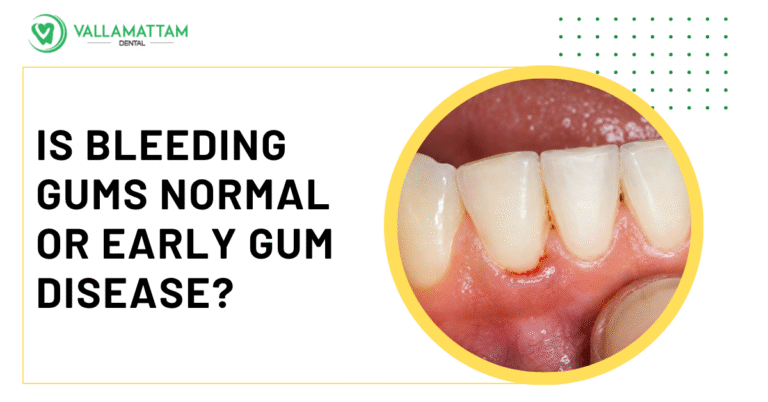
2. Gum recession
Healthy gums cover and protect the tooth roots. As gums recede, the root surface becomes exposed.
Gum recession may result from:
- Gum disease
- Aggressive brushing
- Teeth grinding
- Age-related changes
Unlike enamel, the root surface is much softer and more sensitive to temperature changes.
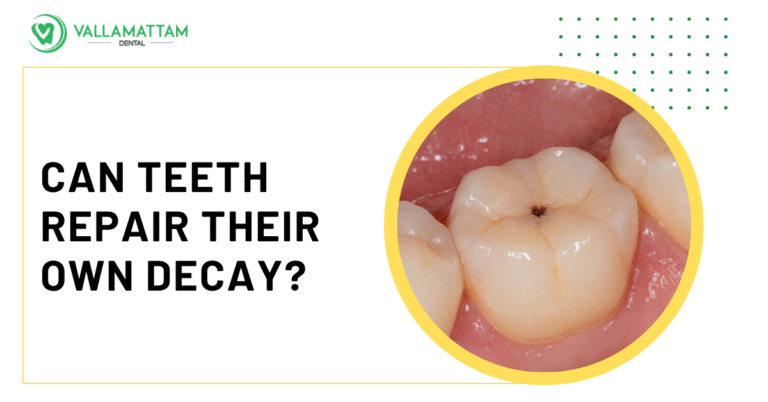
3. Tooth decay
A cavity can create a direct pathway for cold temperatures to reach the inner layers of the tooth.
Early decay may only cause occasional sensitivity. As the cavity becomes deeper, the discomfort often becomes more frequent and intense.
If left untreated, decay can eventually reach the dental pulp, leading to severe pain and the possible need for root canal treatment.
4. A cracked tooth
Small cracks are not always visible, but they can allow cold liquids to penetrate deep into the tooth.
You may notice:
- Pain when drinking something cold
- Pain while biting
- Sensitivity that comes and goes
- Difficulty identifying exactly which tooth hurts
Cracks often require professional examination because they can be difficult to detect without dental imaging.
5. Worn or leaking fillings
Dental fillings do not last forever. Over time, they can wear down, crack, or separate slightly from the tooth.
Even a tiny gap can allow cold liquids to reach sensitive areas beneath the filling.
Replacing an old filling is often enough to eliminate the discomfort.
6. Teeth whitening
Professional and at-home whitening treatments commonly cause temporary sensitivity.
This usually improves within a few days after treatment. If the sensitivity persists or worsens, your dentist should evaluate the tooth to rule out other causes.
When should you be concerned?
Not every episode of cold sensitivity requires urgent treatment, but some symptoms deserve prompt attention.
Arrange a dental examination if:
- The pain lasts longer than a few seconds after the cold drink is removed.
- The discomfort is becoming more frequent.
- The tooth also hurts when chewing.
- You notice swelling or a bad taste in your mouth.
- The pain wakes you up at night.
- You have visible damage, a broken filling, or a cracked tooth.
Persistent sensitivity often indicates that the nerve inside the tooth is becoming inflamed.
How dentists identify the cause
Finding the exact cause of cold sensitivity requires more than just looking at the tooth.
Your dentist may:
- Review when the pain started and what triggers it.
- Examine the tooth for cavities, cracks, or worn enamel.
- Check the gums for recession or signs of gum disease.
- Test the tooth’s response to cold.
- Take dental X-rays if deeper problems are suspected.
Because several different conditions can produce similar symptoms, an accurate diagnosis is important before treatment begins.
Treatment depends on the underlying cause.
The right treatment varies depending on why the tooth is sensitive.
For mild sensitivity
If the tooth is healthy but the dentin is exposed, treatment may include:
- Desensitising toothpaste
- Fluoride applications
- Bonding agents that seal exposed dentin
- Advice on improving brushing technique
These treatments help reduce nerve stimulation rather than simply masking the pain.
For tooth decay
If a cavity is responsible, removing the decay and placing a filling usually resolves the sensitivity.
Early treatment also prevents the cavity from becoming larger and affecting the tooth nerve.
For gum recession
Management may involve:
- Treating gum disease if present
- Improving oral hygiene techniques
- Protective bonding materials
- Gum grafting in selected cases
The appropriate option depends on how much root surface has been exposed.
For cracked teeth
Treatment depends on the size and location of the crack.
Options may include:
- Dental bonding
- A protective crown
- Root canal treatment is performed if the nerve has been affected.
- Tooth extraction when the crack cannot be repaired
Early diagnosis offers the best chance of saving the tooth.
Can you prevent cold sensitivity?
In many cases, yes.
Simple preventive habits include:
- Brush gently using a soft-bristled toothbrush.
- Use fluoride toothpaste every day.
- Avoid brushing immediately after consuming acidic foods or drinks.
- Limit sugary and acidic beverages.
- Wear a night guard if you grind your teeth.
- Attend regular dental check-ups to detect problems early.
These measures help preserve enamel, protect the gums, and reduce the risk of developing sensitivity.
Frequently Asked Questions
Is tooth sensitivity to cold always a sign of a cavity?
No. Although cavities are a common cause, cold sensitivity can also result from gum recession, enamel wear, cracked teeth, worn fillings, or recent whitening treatment.
Why does only one tooth hurt?
Sensitivity affecting a single tooth is more likely due to a local problem, such as decay, a crack, or a failing filling. A dental examination can identify the exact cause.
Will sensitive toothpaste fix the problem?
Sensitive toothpaste can reduce discomfort caused by exposed dentin, but it cannot repair cavities, cracks, or damaged fillings. If the sensitivity continues, professional assessment is recommended.
Can the pain go away on its own?
Temporary sensitivity sometimes settles, particularly after whitening treatment. However, recurring or worsening pain usually indicates an underlying issue that should be examined.
Don’t ignore recurring tooth sensitivity
A sharp pain when drinking cold water is your body’s way of telling you that the tooth needs attention. Sometimes the solution is as simple as treating exposed dentin. In other cases, early treatment of decay, a cracked tooth, or a failing filling can prevent much more extensive dental work later.
If cold drinks consistently make one or more teeth hurt, arranging a dental examination is the safest way to identify the cause and treat it before the problem progresses.