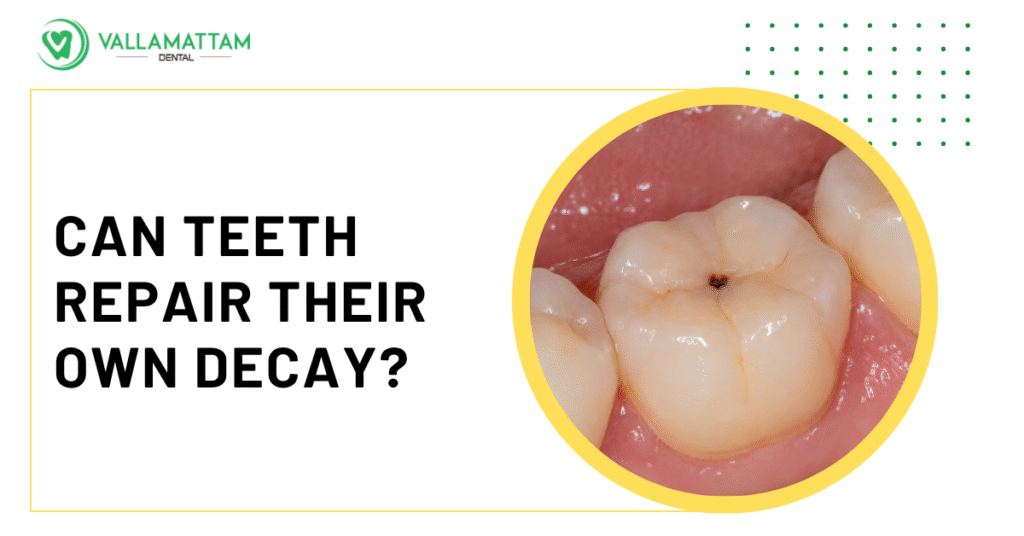
If you’ve noticed a small dark spot on your tooth or your dentist mentioned an early cavity, you might wonder: can it heal on its own? The short answer is: it depends on how early the decay is caught. A cavity that has only affected the outer enamel layer may sometimes be reversed with good oral care and fluoride. However, once decay reaches the dentin (the layer beneath enamel), it cannot heal without a dental filling. A dentist can confirm the stage of decay and recommend the right approach.
What Is a Cavity?
A cavity, also called dental caries, is a permanently damaged area in the hard surface of your tooth. It develops when acids produced by bacteria in plaque gradually dissolve tooth enamel. Over time, this can create a hole. Cavities are one of the most common dental problems worldwide, affecting people of all ages.
Can a Small Cavity Heal on Its Own?
In very early stages, before a physical hole forms, the tooth may be able to repair itself through a process called remineralisation. This happens when minerals like calcium and phosphate from saliva, fluoride toothpaste, and certain foods are redeposited into the enamel. This can strengthen the weakened area and potentially stop the decay from progressing.
However, once the decay has broken through the enamel and created a cavity, the tooth cannot regrow the lost structure. At that point, a tooth filling is usually needed to restore the tooth and prevent further damage.
What Is Early Tooth Decay?
Early tooth decay, sometimes called a pre-cavity or incipient caries, appears as a white or chalky spot on the tooth surface. This is a sign that minerals have been lost from the enamel, but the surface is still intact. It is often reversible with improved oral hygiene, fluoride treatments, and dietary changes. Regular dental check-ups can help detect these early changes before they become cavities.
Stages of Decay: When Healing Is Possible
Understanding the stages of decay helps clarify when a cavity can heal and when it cannot.
- Stage 1: Demineralisation. White spots appear. Enamel is weakened but not broken. This stage may be reversible with fluoride and good oral care.
- Stage 2: Enamel decay. The enamel breaks down, forming a small hole. A filling is typically required.
- Stage 3: Dentin decay. Decay reaches the softer dentin layer. This can cause sensitivity and progresses faster. A filling is needed.
- Stage 4: Pulp involvement. Decay reaches the tooth’s nerve centre, potentially causing pain and infection. Root canal treatment may be necessary.
What Are the Symptoms of a Cavity?
Early cavities often cause no symptoms. As decay progresses, you may notice:
- Tooth sensitivity to sweet, hot, or cold foods and drinks
- A visible hole or pit in the tooth
- Brown, black, or white spots on the tooth surface
- Pain when biting down
- Bad breath or a bad taste in the mouth
If you experience persistent or severe tooth pain, it’s important to see a dentist promptly. These symptoms can indicate deeper decay or infection.
How Is a Cavity Treated?
Treatment depends on the stage and extent of the decay.
1. Remineralisation for Early Decay
If the cavity is still in the pre-cavity stage, your dentist may recommend:
- Fluoride varnish or gel applications
- Prescription fluoride toothpaste
- Improved brushing and flossing habits
- Dietary changes to reduce sugar and acid exposure
These measures can help strengthen the enamel and may reverse early decay.
2. Tooth Filling for Established Cavities
Once a hole has formed, a tooth filling is the standard treatment. The dentist removes the decayed tissue and fills the space with a durable material, such as composite resin or amalgam. Fillings restore the tooth’s shape and function and prevent further decay.
3. Root Canal Treatment for Deep Decay
If decay has reached the pulp, a root canal treatment may be needed to remove infected tissue, relieve pain, and save the tooth. In some cases, a crown is placed afterwards to protect the tooth.
For more details on advanced treatments, you can explore our root canal treatment in Kakkanad page.
When Should You See a Dentist?
You should see a dentist if you notice any of the following:
- A visible hole or dark spot on a tooth
- Tooth sensitivity or pain that lasts more than a day or two
- Pain when chewing or biting
- Swelling around a tooth or in the gum
- Bad breath or an unpleasant taste that doesn’t go away
Regular dental check-ups every six months can help catch cavities early, when they are easier to manage. If you’re in Kakkanad or Kochi, you can contact Vallamattam Dental Clinic to schedule an evaluation.
How to Prevent Cavities
Prevention is always better than treatment. Here are some practical steps:
- Brush your teeth twice a day with fluoride toothpaste.
- Floss daily to clean between teeth.
- Limit sugary and acidic foods and drinks.
- Drink water, especially after meals, to help wash away food particles.
- Consider dental sealants for children and teenagers.
- Visit your dentist regularly for check-ups and professional cleanings.
For children, early dental visits are especially important. Our pediatric dentistry services focus on gentle, preventive care for young smiles.
Frequently Asked Questions
Can a cavity go away without a filling?
Only if it is in the very early stage (demineralisation) and has not formed a hole. Once a cavity has formed, a filling is usually necessary.
How long does it take for a cavity to heal?
Early decay may take weeks to months to remineralise with consistent fluoride use and good oral hygiene. However, established cavities do not heal on their own.
Can I reverse a cavity with oil pulling or home remedies?
There is no strong scientific evidence that oil pulling or other home remedies can reverse a cavity. They may support oral hygiene but should not replace professional dental care.
What happens if a cavity is left untreated?
Untreated cavities can grow deeper, causing pain, infection, and possibly tooth loss. In severe cases, the infection can spread to other parts of the body.
Are dental fillings safe?
Yes, dental fillings are safe and widely used. Your dentist can discuss the best material for your situation.
Conclusion
While a very early cavity may sometimes be reversed with good oral care and fluoride, most cavities require a tooth filling to stop the decay and restore the tooth. If you suspect a cavity, don’t wait—early treatment is often simpler and less invasive. A dentist can assess your teeth and recommend the right course of action. If you’re in Kakkanad or nearby, consider reaching out to Vallamattam Dental for a professional evaluation. Your smile deserves expert care.