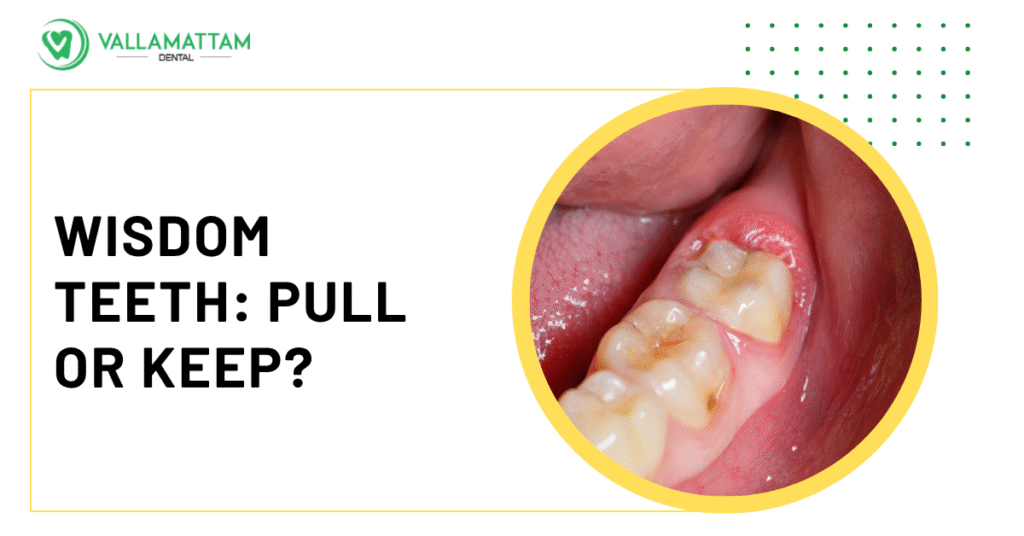
Wisdom tooth pain is discomfort that comes from the third molars, the last teeth to develop at the back of the mouth. It usually appears between the ages of 17 and 25, though it can happen later. The pain may be mild and occasional, or it can be sharp, throbbing, and persistent. In many cases, wisdom tooth pain is linked to an impacted wisdom tooth, a wisdom tooth infection, or pressure on the neighbouring teeth. If the pain is severe, recurring, or comes with swelling or fever, a dentist can confirm the cause and advise whether wisdom tooth removal is needed.
What Causes Wisdom Tooth Pain?
Wisdom teeth often do not have enough room to grow into a normal position. When a tooth cannot fully erupt, it is called an impacted wisdom tooth. This is one of the most common reasons for pain at the back of the mouth.
Common causes include:
- Impaction: The tooth grows sideways, tilts, or stays trapped under the gum.
- Partial eruption: Part of the tooth breaks through the gum, creating a flap where food and bacteria can collect.
- Pericoronitis: Inflammation of the gum around a partially erupted wisdom tooth, which can be painful and may swell.
- Wisdom tooth infection: Bacteria trapped around the tooth can lead to infection, pus, and throbbing pain.
- Pressure on nearby teeth: A tilted wisdom tooth can push against the second molar and cause discomfort.
- Cavities: Wisdom teeth are hard to clean, so decay can develop and cause pain.
What Are the Symptoms of Wisdom Tooth Problems?
Symptoms can vary from person to person. Some people feel only mild tenderness, while others have significant pain that affects eating and sleep.
Signs to watch for:
- Pain or aching at the back of the jaw
- Swelling or redness of the gums near the last molar
- Difficulty opening the mouth fully
- Bad breath or an unpleasant taste
- Tenderness when biting or chewing
- Jaw stiffness or a dull headache
- Swollen lymph nodes under the jaw
If you notice swelling that spreads, difficulty swallowing, or fever, it is important to seek dental care promptly. These can be signs that an infection is spreading and needs professional attention.
When Should You Consider Wisdom Tooth Removal?
Not every wisdom tooth needs to be removed. Some wisdom teeth erupt fully, sit in a healthy position, and can be cleaned easily. In those cases, a dentist may simply monitor them.
Removal is often considered when:
- The tooth is impacted and causes pain or pressure
- There are repeated episodes of wisdom tooth infection or pericoronitis
- The tooth is damaging the adjacent molar or causing decay
- A cyst or fluid-filled sac forms around the tooth
- The tooth is decayed and cannot be restored easily
- Orthodontic treatment or other dental work is being planned
A dentist can confirm whether removal is appropriate after examining your mouth and reviewing a dental X-ray. The X-ray shows the position of the tooth roots and their relation to nerves and the sinus cavity, which helps plan the procedure safely.
What Happens During Wisdom Tooth Removal?
Wisdom tooth removal is a common dental procedure. The exact steps depend on whether the tooth has erupted or is still under the gum.
Simple extraction
If the tooth is fully visible, it may be removed with a simple extraction using local anaesthesia. The area is numbed, and the tooth is gently loosened and lifted out.
Surgical extraction
If the tooth is impacted, a small incision in the gum may be needed. In some cases, the tooth is divided into smaller pieces for easier removal. Sedation options may be available for patients who feel anxious.
After the procedure
Most people experience some swelling and soreness for a few days. Your dentist will give you instructions on managing discomfort, eating soft foods, and keeping the area clean. Healing usually progresses well when aftercare advice is followed.
Can Wisdom Tooth Pain Be Treated Without Removal?
In some situations, short-term relief is possible without removing the tooth. A dentist may clean the area, prescribe antibiotics if there is an infection, and recommend warm saltwater rinses. However, these measures often manage the symptoms rather than solve the underlying problem. If the tooth keeps causing pain or infection, removal may still be advised later.
For pain that is linked to decay or nerve involvement in a neighbouring tooth, treatments such as root canal treatment in Kakkanad may be discussed. Your dentist will explain which option suits your situation.
How Is Wisdom Tooth Pain Diagnosed?
A dental visit usually starts with a discussion of your symptoms and a clinical examination. The dentist will look at the back of your mouth, check for swelling, and gently probe the gums around the wisdom tooth.
Dental X-rays are often taken to see:
- Whether the tooth is impacted
- The angle and depth of the tooth
- The position of roots near nerves
- Signs of infection, decay, or cyst formation
This information helps the dentist decide whether monitoring, treatment, or removal is the right next step.
How Can You Reduce Discomfort at Home?
While waiting for a dental appointment, some simple measures may help ease mild discomfort:
- Rinse gently with warm salt water
- Apply a cold compress to the outside of the jaw for short periods
- Eat soft, cool foods and avoid very hot or spicy items
- Keep the area clean with gentle brushing
- Avoid poking the gum with sharp objects
Over-the-counter pain relief may help, but it is best to check with a dentist or pharmacist first, especially if you have other health conditions or take regular medication.
When Should You See a Dentist?
You should consider seeing a dentist if:
- Pain lasts more than a few days or keeps returning
- You have swelling in the gum, cheek, or jaw
- You find it hard to open your mouth or swallow
- You have a fever or feel unwell
- There is bleeding or pus around the tooth
- Pain is affecting your sleep or daily activities
Early evaluation can help prevent complications and make treatment simpler. If you are in or around Kakkanad, you can contact our clinic to arrange a consultation.
How to Prevent Wisdom Tooth Problems
Not all wisdom tooth issues can be prevented, but good oral care can reduce the risk of decay and gum problems:
- Brush twice daily, reaching the back teeth carefully
- Use a soft-bristled brush and fluoride toothpaste
- Floss or use interdental brushes where possible
- Attend regular dental check-ups so changes can be spotted early
- Follow your dentist’s advice if they recommend monitoring or removal
Routine general dentistry visits are a good opportunity to check the position of wisdom teeth before they cause trouble.
Frequently Asked Questions
Is wisdom tooth pain always a sign that removal is needed?
No. Some wisdom teeth cause mild discomfort as they erupt and then settle. Removal is usually considered when pain is persistent, the tooth is impacted, or there are repeated infections.
How long does wisdom tooth removal take?
A simple extraction may take a few minutes. A surgical removal can take longer, depending on the position of the tooth. Your dentist will explain what to expect.
Can I delay wisdom tooth removal?
In some cases, yes. If the tooth is not causing problems, a dentist may recommend monitoring it. However, delaying treatment when there is an active infection or severe pain can lead to more complications.
What is the recovery time after wisdom tooth removal?
Most people notice improvement within a few days. Swelling and soreness can last up to a week. Following your dentist’s aftercare instructions helps support healing.
Are there risks with wisdom tooth removal?
As with any procedure, there are some risks, such as bleeding, infection, or nerve sensitivity. Your dentist will discuss these with you and take steps to reduce them.
Conclusion
Wisdom tooth pain can range from mild to severe, and it often signals that a third molar needs attention. Impacted wisdom teeth, infections, and pressure on nearby teeth are common reasons for discomfort. While some cases can be managed with simple measures, others may need wisdom tooth removal to prevent further problems. A dental examination and X-ray can confirm the cause and help you decide on the right treatment. If you are experiencing persistent or recurring pain, consider booking a consultation. For patients in Kakkanad and nearby areas, Vallamattam Dental offers gentle evaluation and clear guidance. You can also explore more topics on our dental health blog.