Swollen gums around one tooth: What does it mean?
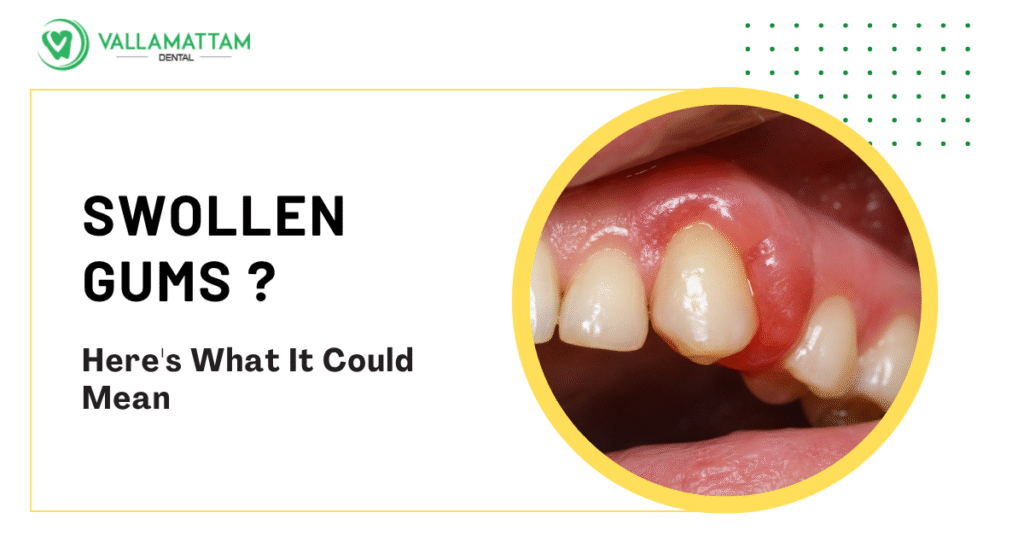
If you notice swollen gums around a single tooth, it usually points to a local issue rather than a whole-mouth problem. The swelling may be caused by food trapped under the gum, a minor injury, or an infection such as a gum abscess. In many cases, it can be managed with good oral hygiene and warm salt water rinses, but persistent or painful swelling should be evaluated by a dentist.
This article explains the common causes, symptoms, and treatment options for swollen gums around one tooth, and when you should seek professional dental care.
Why is only one area of my gum swollen?
Swelling that is limited to one tooth often indicates a problem that is specific to that area. Unlike generalized gum inflammation (gingivitis) that affects many teeth, a single swollen spot suggests something is irritating or infecting that particular site.
Common causes of localized gum swelling
- Food impaction: A piece of food stuck between the tooth and gum can cause irritation and swelling.
- Gum infection (periodontal abscess): Bacteria can accumulate in a deep pocket around the tooth, leading to an abscess.
- Tooth decay or a cracked tooth: An untreated cavity or fracture can allow bacteria to reach the pulp, causing an infection that spreads to the gum.
- Improper brushing or flossing: Aggressive cleaning can injure the gum, causing temporary swelling.
- An erupting tooth: In children or adults, a tooth pushing through the gum can cause localized swelling.
What does a gum abscess feel like?
A gum abscess is a pocket of pus that forms due to a bacterial infection. It often feels like a soft, tender bump on the gum. You may also notice:
- Throbbing pain that may radiate to the jaw or ear
- Redness and warmth in the area
- A bad taste in your mouth or foul-smelling breath
- Difficulty chewing or biting
- Fever or general feeling of being unwell (in some cases)
If you experience these symptoms, it is important to see a dentist promptly. A gum abscess will not resolve on its own and may require drainage or root canal treatment if the infection has reached the tooth’s pulp.
Can swollen gums around one tooth be serious?
Yes, in some cases. While minor swelling may subside with good oral hygiene, persistent or worsening swelling can indicate an infection that may spread to surrounding tissues or even into the jawbone. Ignoring a gum abscess can lead to more serious health complications. Therefore, if the swelling lasts more than a few days, is painful, or is accompanied by fever, you should seek dental evaluation.
Home care for swollen gums: What can I do?
For mild swelling, you can try these home remedies to ease discomfort:
- Rinse your mouth with warm salt water (half a teaspoon of salt in a glass of warm water) two to three times a day.
- Gently floss around the area to remove any trapped food particles.
- Avoid chewing on that side of the mouth.
- Use a soft-bristled toothbrush and brush gently.
- Apply a cold compress to the outside of your cheek to reduce swelling.
These measures can provide temporary relief, but they do not treat the underlying cause. If the swelling persists or worsens, professional care is necessary.
When should I see a dentist for swollen gums?
You should schedule a dental appointment if:
- The swelling lasts more than two or three days.
- You have severe pain or discomfort.
- You notice pus or a bad taste in your mouth.
- You have a fever or swollen lymph nodes.
- The swelling keeps coming back in the same spot.
Early intervention can prevent more extensive treatment. At our general dentistry practice, we can examine the area, take X-rays if needed, and recommend the appropriate treatment.
What treatments do dentists use for swollen gums?
The right treatment depends on the cause. Common options include:
- Professional cleaning: If plaque or tartar is causing the swelling, a deep cleaning (scaling and root planing) may be recommended.
- Antibiotics: If there is an active infection, your dentist may prescribe antibiotics.
- Drainage of an abscess: The dentist may need to drain the pus to relieve pressure and remove the infection.
- Root canal treatment: If the infection has reached the tooth’s pulp, a root canal may be necessary to save the tooth.
- Tooth extraction: In severe cases where the tooth cannot be saved, extraction may be the only option.
Your dentist will explain the best course of action based on your specific situation.
How can I prevent swollen gums?
Good oral hygiene is your best defense. Here are some tips:
- Brush your teeth twice a day with fluoride toothpaste.
- Floss daily to remove plaque between teeth.
- Use an antiseptic mouthwash if recommended by your dentist.
- Eat a balanced diet and limit sugary snacks.
- Visit your dentist regularly for check-ups and cleanings.
Regular dental visits can catch problems early before they become painful or serious.
Frequently asked questions about swollen gums
Can a swollen gum around one tooth go away on its own?
Sometimes, if the cause is minor like food impaction, the swelling may subside with good oral hygiene. However, if it is due to an infection or abscess, it will not resolve without treatment.
Is a gum abscess an emergency?
A gum abscess is a serious condition that requires prompt dental care. If you have severe pain, swelling, or fever, you should seek emergency dental treatment.
Can I pop a gum abscess at home?
No. Popping an abscess can spread the infection and make it worse. Only a dentist should drain an abscess safely.
Does a swollen gum always mean I need a root canal?
Not necessarily. Swollen gums can be caused by many things. A root canal is only needed if the tooth’s pulp is infected. Your dentist will determine the cause with an examination and X-rays.
Conclusion: Don’t ignore swollen gums around one tooth
Swollen gums around one tooth can be uncomfortable and concerning. While some cases are minor, others may signal a deeper infection that needs professional treatment. If you are experiencing persistent swelling, pain, or other symptoms, we encourage you to contact our dental clinic in Kakkanad to schedule an evaluation. Early care can save your tooth and protect your overall health.