Wisdom teeth, also known as third molars, are the final set of permanent teeth to emerge, typically appearing between the ages of 17 and 25.
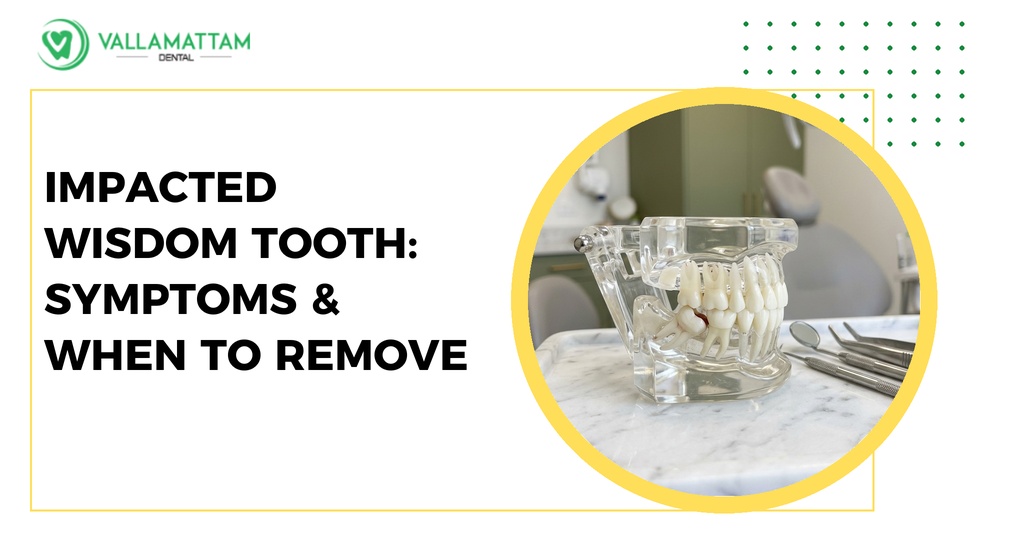
For many people, the jawbone does not have sufficient space to accommodate these late-emerging molars. When a wisdom tooth cannot grow in normally due to lack of space, awkward angles, or obstruction from neighbouring teeth or bone, it is classified as impacted.
An impacted wisdom tooth does not automatically require surgical removal. In many cases, symptom-free wisdom teeth that do not compromise neighbouring structures can be safely monitored over time. However, when impaction leads to recurrent infection, localized pain, or damage to adjacent teeth, removal may be recommended.
What Does Wisdom Tooth Impaction Mean?
Impaction occurs when a tooth is blocked from erupting into its normal functional position. There are two primary types of impaction:
- Partial Impaction: The tooth breaks partially through the gumline, leaving a portion of the crown exposed while the rest remains submerged beneath the gum or bone. This creates an open flap of gum tissue (an operculum) where bacteria and food particles easily accumulate.
- Complete Impaction: The tooth remains fully trapped beneath the gum tissue and embedded inside the jawbone. It may lie horizontally, vertically, or angled forward (mesial impaction) against the adjacent second molar.
Common Symptoms of an Impacted Wisdom Tooth
While some impacted teeth remain quiet and cause no noticeable symptoms for years, others trigger clear warning signs:
1. Pain and Pressure at the Back of the Jaw
A persistent, dull ache or throbbing sensation near the back corners of your mouth is one of the earliest signs. This discomfort often increases when chewing or applying pressure to the rear teeth.
2. Red, Swollen, or Tender Gums (Pericoronitis)
When a wisdom tooth is partially erupted, the gum flap covering it can become inflamed and infected—a condition known clinically as pericoronitis. The gum tissue often becomes swollen, tender to touch, and may bleed easily during brushing.
3. Difficulty Opening Your Mouth (Trismus)
Infection or inflammation around lower wisdom teeth can spread to the nearby chewing muscles (masticatory muscles), leading to jaw stiffness and difficulty opening the mouth wide.
4. Unpleasant Taste or Persistent Bad Breath
Because the area around an impacted tooth is difficult to reach with a standard toothbrush or dental floss, trapped food and bacteria can produce a sour taste in the mouth and persistent bad breath.
5. Headaches and Radiating Facial Pain
Pressure from an angled wisdom tooth pressing against surrounding nerves and bone can radiate discomfort along the jawline, into the ear, or toward the neck and temple.
When Can an Impacted Tooth Cause Complications?
If left unaddressed, symptomatic impaction can lead to secondary dental issues:
- Damage to Neighbouring Molars: A wisdom tooth leaning against the second molar can exert pressure that causes root resorption or creates an inaccessible pocket where severe decay develops between the two teeth.
- Cysts in the Jawbone: In rare instances, the fluid-filled sac (follicle) surrounding an unerupted tooth can expand to form a cyst, which can weaken the surrounding jawbone over time.
- Recurrent Gum Infections: Repeated episodes of pericoronitis can cause chronic swelling that makes eating and swallowing uncomfortable.
How Dentists Assess Wisdom Teeth
Evaluating a wisdom tooth requires more than a simple visual examination. Your dentist will typically perform:
1. Clinical Examination: Checking for gum redness, swelling, pocket depth, and bite alignment.
2. Panoramic Dental X-Ray (OPG): A full-mouth radiograph that reveals the exact angle of the wisdom tooth roots, whether the crown is trapped under bone, and how close the roots lie to the inferior alveolar nerve in the lower jaw.
3. Symptom History Review: Evaluating how frequently discomfort occurs and whether it responds to conservative cleaning.
When May Monitoring Be Appropriate?
Your dentist may recommend watchful waiting (active surveillance) if:
- The wisdom tooth is fully erupted, functional, bite-aligned, and easily cleanable.
- A completely impacted tooth is deeply embedded in healthy bone with no signs of cysts, pathology, or pressure on adjacent roots.
- The patient has medical conditions where the surgical risks outweigh the potential benefits of removing an asymptomatic tooth.
When May Surgical Removal Be Recommended?
Surgical extraction is generally discussed when:
- Recurrent infection: Repeated bouts of painful pericoronitis that do not resolve with conservative hygiene.
- Extensive decay: Cavities that cannot be reliably filled or restored due to poor accessibility at the back of the mouth.
- Damage to the second molar: Enamel breakdown, bone loss, or root decay on the neighbouring tooth.
- Orthodontic considerations: In specific cases where space is needed for tooth alignment or orthodontic stability.
Frequently Asked Questions
Is wisdom tooth removal a major surgery?
For most patients, wisdom tooth extraction is a routine outpatient procedure performed under local anaesthesia. You will feel pressure during the procedure, but the area is completely numb to pain.
How long does recovery take after extraction?
Initial soft-tissue healing typically occurs within one to two weeks. Following post-operative instructions—such as avoiding straws, eating soft foods, and keeping the area clean—promotes smooth healing and prevents complications like dry socket.
Can an upper wisdom tooth be easier to remove than a lower one?
Upper wisdom teeth often have simpler root structures and thinner surrounding bone compared to lower molars, which are embedded in denser mandibular bone near major nerves.
What should I do if I experience sudden severe jaw swelling?
Rapidly spreading swelling in the jaw, cheek, or neck, especially if accompanied by fever or difficulty swallowing, requires prompt dental or medical attention to manage infection safely.
Seeking a Clinical Assessment
If you are experiencing recurring tenderness, jaw stiffness, or food catching around your back molars, a professional evaluation can clarify whether your wisdom teeth can be safely monitored or require gentle treatment.
To discuss your symptoms and review diagnostic imaging, book a consultation with our surgical team at Vallamattam Dental Clinic in Kakkanad.
For patients experiencing biting discomfort on back molars, read our related guide on why teeth hurt when chewing.

Clinical Review & Oversight
This guide was reviewed by Dr. Antony Kurian Vallamattam and the specialist team at Vallamattam Dental Clinic in Kakkanad, Kochi. Our clinicians specialize in endodontics, orthodontics, oral surgery, and periodontics.
Meet our dentists & specialists → · Book an appointment in Kakkanad