Choosing Invisalign is a big decision, and it’s natural to have questions. Below are the most common concerns patients ask during consultation — along with clear answers to help you understand what to expect.
How long does Invisalign treatment take?
Treatment time can vary depending on the complexity of the alignment issue. Many mild to moderate cases may take around 6 to 18 months. More involved corrections could take longer. Wearing aligners consistently (usually 20–22 hours per day) can help keep treatment on schedule.
How much does Invisalign cost?
The cost of Invisalign depends on case complexity, treatment duration, and whether additional procedures are needed. In many situations, Invisalign can be comparable to traditional braces. A consultation is the best way to determine exact pricing and payment options.
Is Invisalign painful?
Invisalign is generally considered more comfortable than traditional braces. You may feel mild pressure or tightness when switching to a new aligner, which usually settles within a few days.
Can I eat with Invisalign?
No. Aligners should be removed before eating or drinking anything except water. Eating with them can cause staining or damage. Brushing before reinserting aligners is recommended.
Will Invisalign affect my speech?
Some patients notice a temporary lisp during the first few days. Most adapt quickly as the tongue adjusts to the trays.
How do Invisalign aligners move teeth?
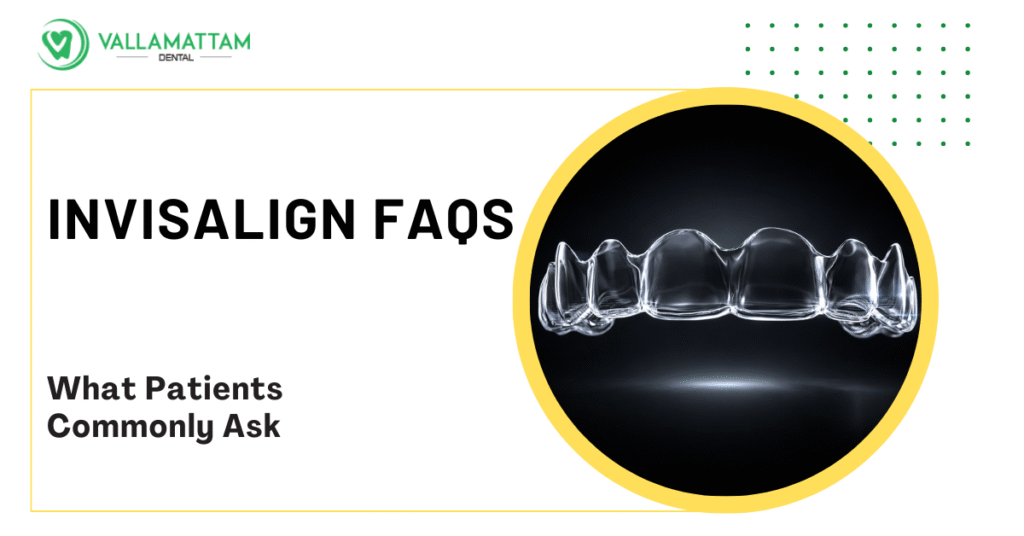
Invisalign uses a series of custom-made clear trays that apply controlled pressure to move teeth into their planned positions gradually. Each aligner advances the movement slightly.
Do I have to wear Invisalign all day?
Aligners are typically worn 20–22 hours per day. Removing them too frequently may slow progress and extend treatment duration.
What happens if I don’t wear them long enough?
Not wearing aligners as recommended can delay movement and may require adjustments to the treatment plan. Consistency plays a significant role in achieving predictable results.
How often do I change aligners?
Most patients change aligners every 1–2 weeks, depending on their personalized treatment plan.
How do I clean Invisalign aligners?
Aligners can be rinsed and gently brushed with lukewarm water and mild soap. Avoid hot water, as it may warp the plastic.
Can Invisalign get stained?
Yes. Coffee, tea, coloured drinks, and smoking can discolor aligners. Removing them before consuming these substances may help maintain clarity.
Can Invisalign make my teeth sensitive?
Some mild sensitivity or pressure can occur when starting a new tray. Persistent sharp pain is not typical and should be evaluated.
What do Invisalign attachments feel like?
Attachments are small tooth-coloured bumps placed on certain teeth to improve the aligner’s grip. They may feel noticeable at first, but generally do not cause pain.
Can I remove Invisalign for sports or special occasions?
Yes, aligners can be removed briefly for sports or events. However, extended removal may slow treatment progress.
Can I smoke or chew gum with Invisalign?
Smoking can stain aligners, and chewing gum can damage them. Removing aligners before smoking or chewing is advisable.
What if I lose or break an aligner?
If an aligner is lost or damaged, contact your dentist promptly. You may be advised to wear your previous tray or to move to the next one temporarily.
Will my teeth stay straight after treatment?
After Invisalign, retainers are typically recommended to help maintain results. Without retention, teeth can gradually shift over time.
Is Invisalign appropriate for everyone?
Invisalign can often address mild to moderate crowding, spacing, and certain bite issues. Severe cases may require alternative orthodontic approaches.
Can Invisalign affect oral hygiene?
Aligners can trap bacteria if oral hygiene is neglected. Brushing and flossing after meals is important before reinserting trays.
Do Invisalign trays show when I smile?
Aligners are clear and discreet. They may be slightly visible up close, but most people find them far less noticeable than traditional braces.
Can I drink coffee with Invisalign in?
It’s recommended to drink only water while wearing aligners. Hot beverages can warp the trays, and coffee may cause staining.
Will Invisalign fix bite issues?
Invisalign may correct many mild to moderate bite concerns, such as overbite or underbite. Complex bite problems may require additional orthodontic planning.
How many aligners will I need?
The number of aligners varies by case. Some patients may require 10–20 trays, while others may need significantly more depending on treatment goals.
Is Invisalign faster than braces?
In some mild cases, Invisalign may produce results in a similar or shorter timeframe than braces. Treatment speed depends more on case complexity than appliance type.
Are there food restrictions with Invisalign?
Unlike braces, Invisalign does not restrict food types — since aligners are removed before eating. This flexibility is one of its advantages.
What happens after Invisalign treatment ends?
After completing active treatment, retainers are usually provided to maintain alignment. Ongoing wear may be recommended to prevent relapse.