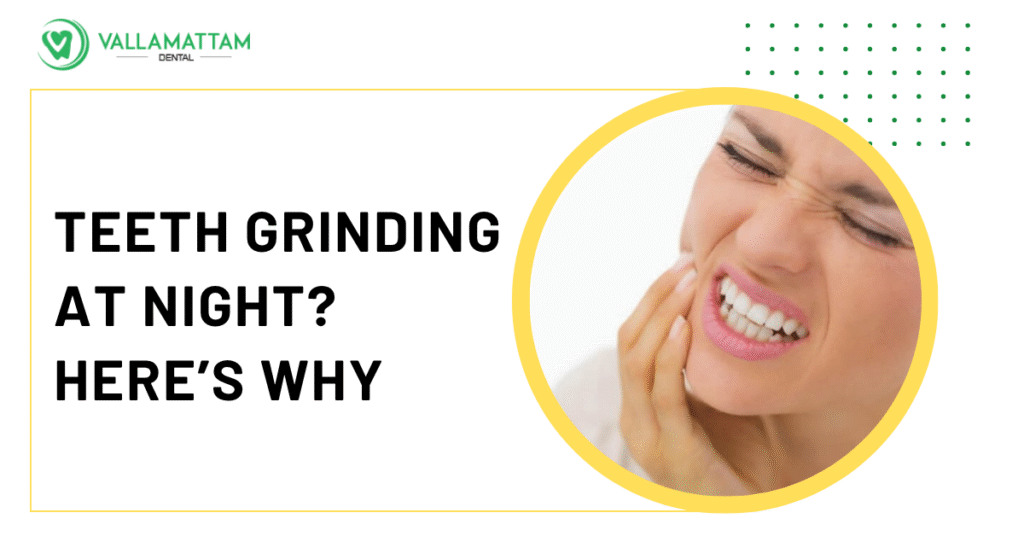
Waking with a sore jaw, headache, or sensitive teeth can be confusing, especially if nothing seemed unusual overnight. These symptoms are often linked to sleep bruxism, or teeth grinding during sleep.
Because this habit often occurs unconsciously, many don’t notice it until symptoms appear. Understanding the cause and your options may help you address the issue early and protect your teeth.
What Is Teeth Grinding (Bruxism)?
Bruxism refers to the habit of clenching or grinding your teeth, often during sleep. It can involve:
- Clenching (holding teeth tightly together)
- Grinding (moving teeth back and forth)
Sleep bruxism is considered a sleep-related movement activity, meaning it can occur without your awareness.
Common Signs You Might Be Grinding Your Teeth
Since you may not notice it directly, the signs often show up indirectly.
You might experience:
- Jaw pain or tightness in the morning
- Headaches, especially near the temples
- Tooth sensitivity without a clear cause
- Worn, flattened, or chipped teeth
- Clicking or stiffness in the jaw joint (TMJ area)
- Disturbed sleep or fatigue
In some cases, a partner may notice grinding sounds during the night.
Why Does Teeth Grinding Happen?
Teeth grinding can be influenced by multiple factors. It is often not caused by a single issue but by a combination of triggers.
1. Stress and Anxiety
One of the most common contributors is emotional stress.
- Work pressure
- Daily worries
- Anxiety or tension
These factors can lead to unconscious clenching during sleep.
2. Sleep Disturbances
Sleep problems can increase the risk of grinding.
These can include:
- Interrupted sleep patterns
- Snoring or breathing irregularities
- Poor sleep hygiene
When sleep is disrupted, the body may respond with muscle activity such as jaw clenching.
3. Bite Alignment Issues
If the teeth do not align properly, it may create uneven pressure during sleep.
This can sometimes lead to:
- Increased grinding
- Jaw strain
- Tooth wear over time.
4. Lifestyle Factors
Certain habits may contribute to bruxism, such as:
- Excess caffeine intake
- Alcohol consumption
- Smoking
These factors can stimulate muscle activity or affect sleep patterns.
5. Medication Side Effects
Some medications may be associated with increased jaw activity during sleep.
If you’ve recently started a new medication and notice symptoms, discussing this with a healthcare provider may be helpful.
What Happens If Teeth Grinding Is Left Unchecked?
Mild grinding may not cause problems immediately, but ongoing bruxism can result in:
- Enamel wear, making teeth more sensitive
- Cracks or fractures in teeth
- Jaw joint discomfort (TMJ issues)
- Headaches or facial muscle fatigue
- Changes in bite alignment
Recognizing symptoms early can help prevent more complex dental issues later.
Practical Steps That May Help Reduce Teeth Grinding
Treatment depends on the cause, but several approaches may reduce bruxism’s impact.
1. Consider a Night Guard
A custom night guard is often recommended as a protective measure.
It may help by:
- Reducing pressure on teeth
- Preventing enamel wear
- Minimizing strain on the jaw
This is a common way to manage symptoms.
2. Manage Stress Levels
Since stress can be a major trigger, relaxation techniques may help.
You might try:
- Deep breathing exercises
- Meditation or mindfulness
- Light stretching before bed.
- Reducing screen time before sleep
Even small changes in routine can improve sleep.
3. Improve Sleep Habits
Better sleep hygiene may reduce nighttime grinding.
Helpful habits include:
- Going to bed at a consistent time
- Avoiding caffeine late in the day
- Creating a calm sleep environment
- Limiting heavy meals before bedtime
4. Be Aware of Daytime Clenching
Some people clench their teeth during the day without realizing it.
You can try:
- Keeping your teeth slightly apart when not eating
- Relaxing your jaw consciously
- Placing the tongue gently between teeth as a reminder
Reducing daytime clenching can help nighttime grinding.
5. Limit Triggering Substances
Reducing intake of:
- Caffeine
- Alcohol
- Tobacco
This may lower nighttime muscle activity.
6. Jaw Exercises and Relaxation
Gentle jaw exercises may help reduce muscle tension.
For example:
- Slowly opening and closing the mouth.
- Gentle side-to-side jaw movements
- Applying warm compresses to the jaw area
These methods may help relax muscles before sleep.
Common Challenges Patients Face
Many delay addressing teeth grinding because symptoms seem manageable at first.
“I don’t feel pain every day.”
Bruxism symptoms may fluctuate, but underlying wear can still occur.
“I didn’t know I grind my teeth.”
Because it occurs during sleep, many discover it only at dental visits or after symptoms appear.
“It’s just stress, it will go away.”
Stress-related grinding may improve, but ongoing habits still affect teeth.
How Dentists May Evaluate Teeth Grinding
A dentist may assess bruxism by:
- Examining tooth wear patterns
- Checking jaw movement and muscle tenderness
- Reviewing bite alignment
- Asking about symptoms like headaches or sleep issues
In some cases, additional evaluation may be recommended if sleep-related conditions are suspected.
When You Might Consider Professional Advice
You may consider a dental visit if:
- You notice increasing tooth sensitivity.
- You regularly experience jaw pain or stiffness.
- Teeth appear worn or chipped.
- Headaches occur frequently in the morning.
- Sleep is being affected.
Early evaluation can help identify the cause and guide treatment.
Teeth grinding during sleep is a common, often unnoticed habit that can affect dental health and comfort. While it may not always lead to serious issues, persistent grinding can gradually impact teeth and jaw function.
Understanding the causes and making simple changes such as improving sleep, managing stress, or considering protection may help. If symptoms persist, seek evaluation for the best approach.