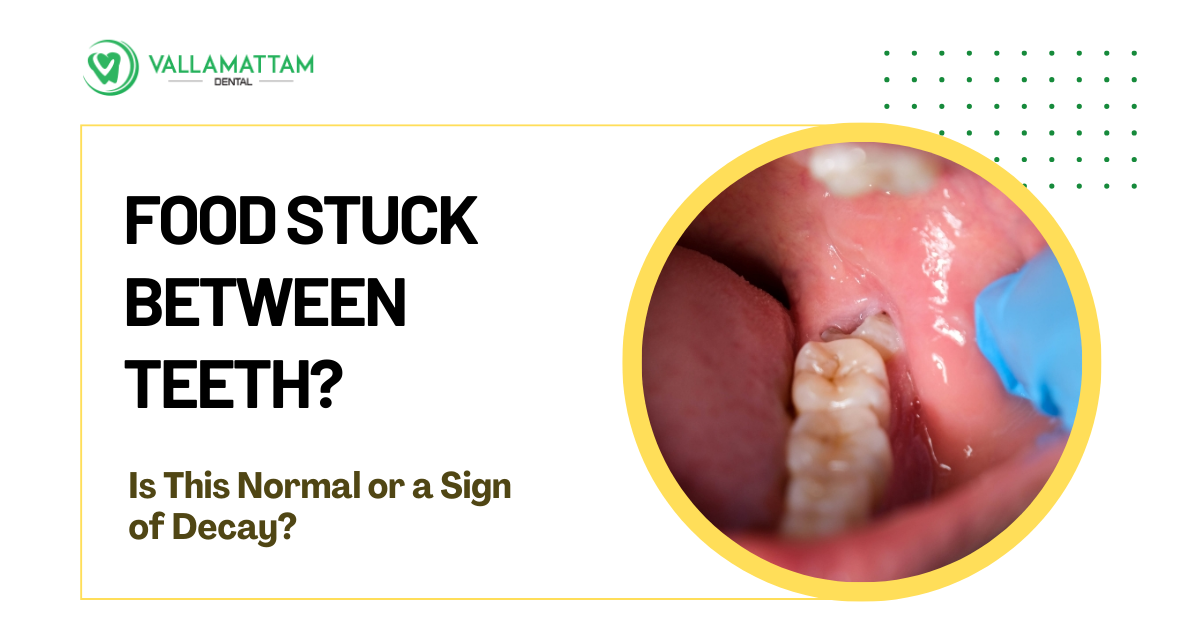
You finish a meal. A few minutes later, you feel it — something wedged between two teeth. You floss. It happens again the next day. And the next.
So the question becomes:
Is food getting stuck between teeth normal, or could it be a sign of tooth decay or gum disease?
The answer depends on frequency, location, discomfort level, and whether the problem is getting worse. Let’s break this down clearly and practically.
Is It Normal for Food to Get Stuck Between Teeth?
Short answer: Occasionally, yes. Repeatedly in the same spot, not always.
Natural Tooth Anatomy
Teeth are not fused. Small contact points exist between them. Certain foods are more likely to lodge in these spaces, including:
- Meat fibers
- Popcorn kernels
- Seeds
- Leafy greens
If this happens once in a while and resolves easily with flossing, it may be harmless.
The Key Distinction: Occasional vs. Frequent
Ask yourself:
- Does it happen daily?
- Is it always in the same spot?
- Is it becoming easier for food to get trapped?
- Are your gums irritated in that area?
If the issue is frequent and localized, it may indicate structural or dental changes.
Common Causes of Food Getting Stuck Between Teeth
Food impaction (the clinical term for food that becomes trapped) can occur for several reasons.
1. Natural Gaps Between Teeth
Some people naturally have slight spacing. Over time, small gaps may become more noticeable.
Age-related changes in bite alignment can also create new spaces.
2. Worn or Shifting Teeth
Teeth can shift due to:
- Grinding (bruxism)
- Bite imbalances
- Missing teeth
- Uneven chewing pressure
Even minor shifts can weaken the tight contact point between teeth, creating a “food trap.”
3. Receding Gums
Gum tissue may gradually recede due to:
- Aggressive brushing
- Gum disease
- Aging
When gums recede, triangular spaces may form near the gumline. These areas can trap debris more easily.
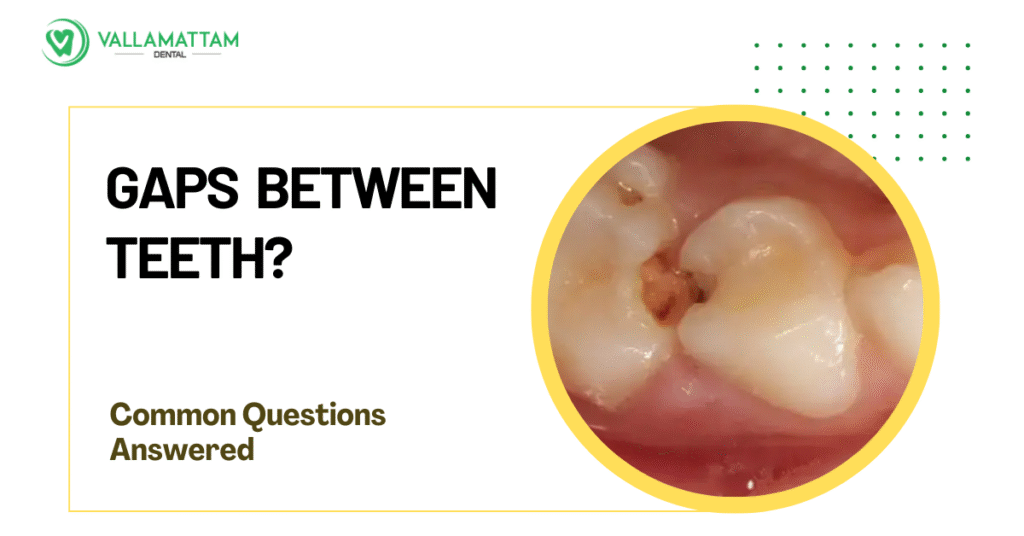
4. Cavities Between Teeth (Interproximal Decay)
This is one of the more important causes.
A cavity forming between teeth can:
- Break down enamel
- Create rough edges
- Distort the natural contact point.
These changes may allow food to wedge more easily.
Interproximal cavities often do not cause pain early on, which is why they can go unnoticed without dental X-rays.
5. Faulty or Aging Dental Work
Fillings or crowns that:
- Have overhanging edges
- Lose proper contact with adjacent teeth
- Wear down over time
…can create artificial spaces where food collects.
Warning Signs: It Might Be a Cavity
While you cannot self-diagnose decay accurately, certain signs may raise suspicion:
- Floss repeatedly, shredding in the same location
- Bleeding gums are limited to one specific area
- Persistent bad taste
- Sensitivity to sweets or cold
- Mild pain when biting
A key point: Cavities between teeth may progress silently at first.
If symptoms persist, professional evaluation may be appropriate.
Why Food Impaction Should Not Be Ignored
Chronic food trapping may lead to:
- Increased bacterial buildup
- Localized gum inflammation
- Bad breath
- Gum pocket formation
- Bone loss over time (if associated with gum disease)
Not every food trap results in serious damage. However, persistent irritation can create a cycle of inflammation.
The longer the issue remains unaddressed, the more complex it might become.
What You Can Do at Home
If food keeps getting stuck, there are practical steps you can take.
1. Improve Flossing Technique
Many people floss, but not effectively.
Correct method:
- Use 30–40 cm of floss.
- Wrap around the middle fingers.
- Slide gently between teeth.
- Curve into a “C” shape around one tooth.
- Move up and down beneath the gumline.
- Repeat for the adjacent tooth.
Avoid snapping the floss downward, as this may irritate the gums.
2. Consider Interdental Brushes
For slightly wider gaps, interdental brushes may:
- Clean more efficiently
- Remove trapped debris
- Reduce gum irritation
Size selection matters — too large can cause trauma.
3. Water Flossers (Recommended)
Water flossers may help flush debris from:
- Deep contact areas
- Gum pockets
- Back teeth
They can complement, but not always replace, traditional flossing.
4. Monitor the Area
Track:
- Frequency of food trapping
- Bleeding episodes
- Increasing gap size
- Sensitivity development
Changes over time are more important than isolated events.
5. Avoid Aggressive Picking
Toothpicks or sharp objects may:
- Injure gum tissue
- Widen gaps
- Cause bleeding
If you need to pick frequently, that itself is a sign worth evaluating.
When Should You See a Dentist?
Professional evaluation may be advisable if:
- Food gets trapped daily in the same spot
- The gap appears to be widening
- Gums bleed consistently in one area
- There is sensitivity or pain
- You notice discoloration between teeth
Dentists may use:
- Clinical examination
- Bitewing X-rays
- Contact point assessment
Early detection can enable simpler, more conservative treatment options.
How Dentists Fix Food Traps
Treatment depends entirely on the underlying cause.
Possible approaches may include:
If Caused by a Cavity:
- Removing decay
- Placing a properly contoured filling
- Restoring tight contact between teeth
If Due to Faulty Fillings:
- Replacing or reshaping existing restoration
If Caused by Tooth Movement:
- Bite adjustment
- Orthodontic consultation (in select cases)
If Gum-Related:
- Professional cleaning
- Gum therapy
- Monitoring periodontal health
Most food traps can be corrected predictably when addressed early.
Food Stuck in Back Teeth vs. Front Teeth
Location matters.
Back Teeth:
- More chewing pressure
- More complex anatomy
- Higher risk of hidden cavities
Front Teeth:
- More affected by gum recession
- Often linked to cosmetic spacing
Understanding the location may guide evaluation.
Common Challenges Patients Face (Frequently Asked Questions)
“I Floss Daily — Why Is This Still Happening?”
Flossing does not always correct structural issues. If contact between teeth has weakened, a professional adjustment may be required.
“There’s No Pain — Should I Still Worry?”
Pain is not always the first symptom of decay. Structural changes can occur quietly.
Monitoring and periodic check-ups can prevent escalation.
“Can I Just Ignore It?”
If the problem is rare and painless, monitoring may be reasonable.
If it is worsening or persistent, ignoring it might allow further breakdown.
Final Thoughts: Normal Annoyance or Early Warning?
Food getting stuck between teeth can be completely normal in some cases — especially with fibrous foods.
However, when it becomes:
- Frequent
- Localized
- Irritating
- Progressively worse
…it may indicate decay, gum changes, or structural issues.
The good news is this: most causes of food impaction are manageable when identified early.
If you are unsure whether your situation is harmless or developing into something more serious, a professional dental assessment can provide clarity and peace of mind.
Addressing small changes early often leads to simpler solutions later.