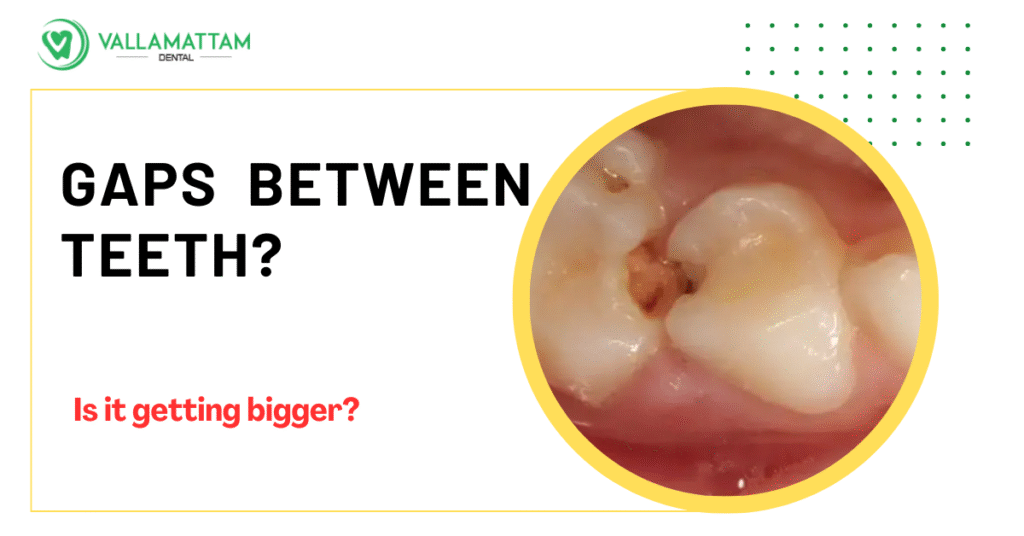
You look in the mirror and notice something different. The space between two teeth, maybe your front teeth, appears slightly wider than before. It may not hurt. It may not feel urgent. But it raises a quiet question:
Why are my teeth moving?
Teeth do not usually shift without a reason. While some spacing changes can be harmless, others may indicate changes in gum health, bone support, or bite alignment. Understanding the cause is essential before deciding whether treatment is necessary.
This article explains why gaps between teeth can widen, when it may be normal, when it could signal a problem, and what steps you can take.
Are Teeth Supposed to Move Over Time?
Teeth are not fixed in concrete. They are supported by:
- Jawbone
- Periodontal ligament
- Gum tissue
These structures can change over time.
Natural Tooth Movement
Minor tooth movement can occur due to:
- Aging
- Bite pressure changes
- Subtle bone remodeling
- Natural wear patterns
Slow, barely noticeable changes over many years may not be unusual.
Slow vs. Sudden Change
The key difference is speed and progression:
- Gradual, stable gap → may be cosmetic.
- Rapid or increasing gap → may require evaluation.
Progressive tooth movement often indicates changes in the supporting structures.
Common Causes of a Widening Gap Between Teeth
A gap that appears to be growing can stem from several factors. Some are cosmetic. Others involve underlying tissue health.
1. Gum Disease (Periodontal Disease)
This is one of the most significant causes.
What happens:
- Bacteria accumulate around the gums.
- Inflammation develops.
- The bone supporting the teeth may gradually break down.
- Teeth lose stability and begin to drift.
Early gum disease may not cause pain.
Possible Warning Signs:
- Bleeding while brushing
- Persistent bad breath
- Red or swollen gums
- Teeth feel slightly loose.
Bone loss can allow teeth to spread apart over time.
2. Gum Recession
Gum recession occurs when gum tissue pulls away from the tooth surface.
This may:
- Expose more of the tooth root.
- Create triangular gaps (often called “black triangles”)
- Make spacing appear larger.
Common contributing factors may include:
- Aggressive brushing
- Chronic inflammation
- Aging
- Genetic predisposition
Recession does not always mean severe disease, but it can change appearance.
3. Missing Teeth Nearby
If a tooth has been extracted or lost:
- Adjacent teeth may drift toward the space.
- Opposing teeth may shift vertically.
- Bite pressure redistributes unevenly.
Even small movements can create visible spacing in other areas of the mouth.
4. Tongue Pressure or Bite Forces
Teeth respond to consistent pressure.
Over time, habits such as:
- Tongue thrusting against front teeth.
- Grinding (bruxism)
- Clenching
- Misaligned bite
…may gradually move teeth outward.
Even subtle forces repeated daily can create change.
5. Orthodontic Relapse
If you previously had braces or aligners:
- Teeth may shift if retainers are not worn consistently.
- Minor gaps can reopen.
- Contact points between teeth may loosen.
Retention is often required in the long term to maintain alignment.
6. Bone Density Changes
Bone naturally remodels throughout life.
In some individuals, bone density changes due to:
- Aging
- Hormonal fluctuations
- Advanced periodontal disease
Reduced bone support may allow teeth to move more easily.
Cosmetic Gap vs. Structural Problem
Not every widening gap signals disease.
Harmless or Cosmetic Causes May Include:
- Natural spacing (diastema)
- Tooth size differences
- Minor orthodontic relapse
- Stable genetic spacing patterns
Potentially Concerning Causes May Include:
- Gap increasing over weeks or months
- Gum bleeding accompanying spacing
- Teeth that feel mobile
- Bite feeling different
- Sensitivity or discomfort
The most important question is:
Is the gap stable — or progressively widening?
Progression suggests an active underlying factor.
Signs You Should Not Ignore
Seek professional evaluation if you notice:
- Gums bleeding consistently
- Gums pulling away from teeth.
- Teeth feeling loose
- Persistent bad breath
- Swelling or inflammation
- Rapid change in spacing
- Changes in how your teeth fit together
Many periodontal issues begin painlessly. Waiting for discomfort may delay intervention.
What You Can Do Right Now
If you notice widening gaps, proactive steps can help.
1. Monitor the Change
- Take clear photos every few months.
- Compare spacing under consistent lighting.
- Track whether the gap is stable or increasing.
Documentation helps identify progression.
2. Improve Oral Hygiene
Daily plaque removal may reduce gum inflammation.
- Use a soft-bristled toothbrush.
- Brush gently along the gumline.
- Floss daily using the correct technique.
- Consider interdental brushes for wider spaces.
Reducing inflammation may stabilize minor spacing related to gum irritation.
3. Avoid Aggressive Brushing
Excessive force can:
- Accelerate gum recession
- Worse exposed root surfaces.
- Increase visible gaps
Use gentle, circular motions rather than scrubbing.
4. Wear Retainers (If Previously Prescribed)
If you have orthodontic retainers:
- Resume consistent wear if safe to do so.
- Consult your dentist if the retainer no longer fits.
Retention may help limit relapse-related movement.
5. Address Teeth Grinding
If you suspect clenching or grinding:
- Discuss night guard options with a dentist.
- Monitor jaw tension or morning soreness.
Reducing force may prevent further shifting.
How Dentists Diagnose the Cause
Professional evaluation is key because cosmetic and structural causes require different management.
A dental assessment may include:
- Periodontal probing (measuring gum pocket depth)
- Digital X-rays (evaluating bone levels)
- Mobility testing
- Bite analysis
- Review of dental history
Diagnosis determines whether the issue is:
- Aesthetic
- Orthodontic
- Periodontal
- Structural
Treatment Options Based on Cause
Treatment varies significantly depending on the underlying issue.
If Gum Disease Is Present
Management may include:
- Scaling and root planing (deep cleaning)
- Ongoing periodontal maintenance
- Improved home care routine
Early intervention may prevent further bone loss.
If the Gap Is Cosmetic
Options might include:
- Composite bonding
- Veneers (in selected cases)
- Minor orthodontic alignment
Cosmetic solutions typically address appearance rather than structural support.
If Teeth Are Shifting Structurally
Treatment may involve:
- Clear aligners
- Orthodontic correction
- Bite adjustment
Correcting underlying pressure patterns may stabilize movement.
If Missing Teeth Are Contributing
Replacement options might include:
- Dental implants
- Bridges
Restoring missing teeth may help prevent further drift.
When Is It Urgent?
Seek prompt evaluation if:
- Teeth feel noticeably loose.
- The gap widens rapidly.
- Swelling or infection develops.
- Pain accompanies movement
Most spacing issues are not emergencies, but rapid progression warrants attention.
Final Thoughts: A Small Gap Can Tell a Bigger Story
A widening gap between teeth does not automatically mean serious disease. However, teeth rarely shift without cause. Changes in gum health, bone support, bite forces, or orthodontic stability can all contribute.
The key is awareness and early evaluation.
Small spacing changes that are addressed early may be easier and more conservative to manage. Ignoring progressive movement, on the other hand, could allow structural issues to worsen over time.
If you have noticed a change in the spacing between your teeth, a professional dental assessment can clarify whether it is cosmetic or structural — and guide you toward appropriate options.
Understanding the cause is always the first step toward the right solution.